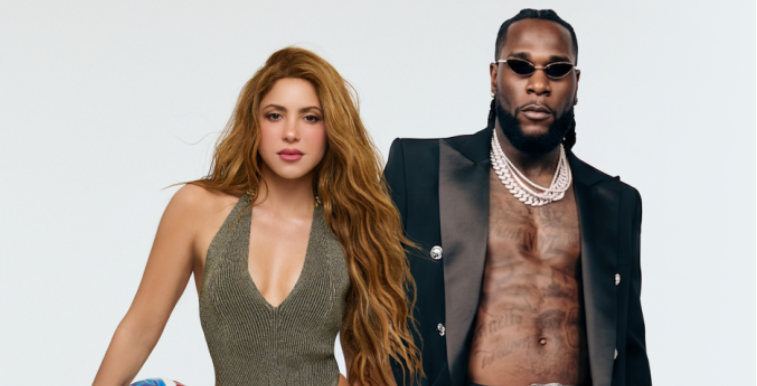
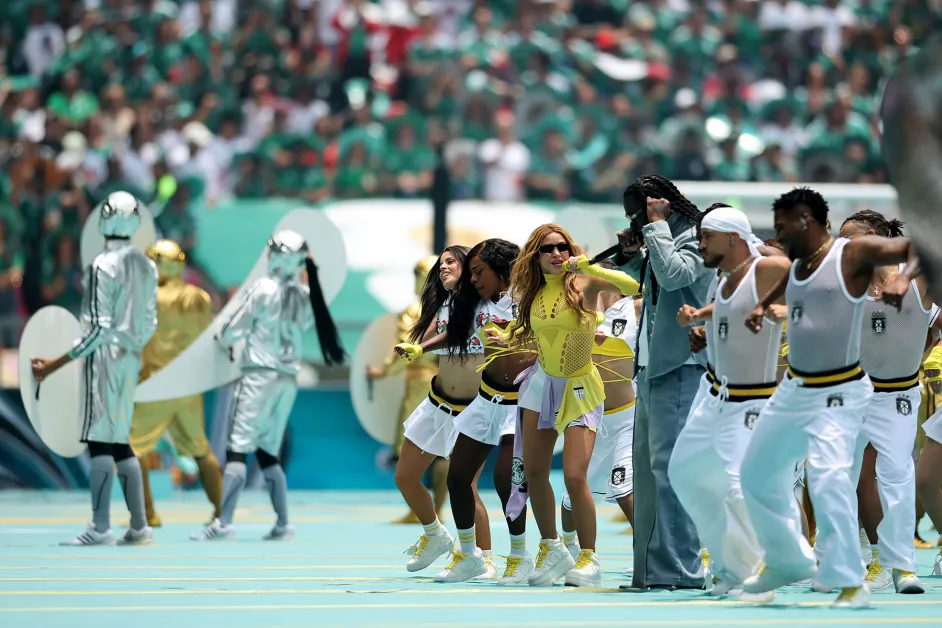
When the FIFA World Cup starts on 11 June, Nigeria will be part of the event but not as a team. Nigerian artist Burna Boy will perform at the opening ceremony alongside Colombian star Shakira, who has performed at a World Cup before. She was at the 2010 World Cup in South Africa.
Canada, Mexico, and the United States will host the tournament together, despite their tough trade and diplomatic ties. This is the second time the World Cup will be held by joint hosts. The first was in 2002 when South Korea and Japan shared the event.
This year's tournament comes at a time filled with uncertainty and tough questions about global peace and security. It could also show how people can live together in a fragile world.
Political issues have always been part of the World Cup. The first tournament was in Uruguay in 1930, during the Great Depression. The final match took place at Estadio Centenario, which was built to celebrate 100 years of Uruguay's independence from Spain in 1830. Spain chose not to participate.
Thirteen countries took part in that first World Cup. Uruguay covered travel and accommodation costs, allowing four European nations to join: Belgium, France, Romania, and Yugoslavia.
In 1934, Italy's leader Benito Mussolini hosted the tournament and used it to promote fascism. Political games helped Italy win the tournament, marking the start of a strong Italian period in football.
Two years later, Italy won again by beating Austria in the gold medal match at the 1936 Berlin Olympics, which was held under Adolf Hitler's regime.
By June 4, 1938, when the third World Cup took place in France, Austria was no longer a country. Just three months earlier, on March 12, Hitler's forces crossed into Austria, and the country was annexed the next day.
Italy won the final on June 19, 1938, becoming the first defending champion to keep the trophy. This was during a time of rising fascism in Europe. Fourteen months later, Germany invaded Poland, starting World War II.
Racism was an early theme in the World Cup. Brazil's Leônidas da Silva, the top scorer in 1938, faced racial prejudice. His absence saw Italy win against Brazil in the semi-final, leading to claims that his exclusion was influenced by tournament officials.
The World Cup was on hold for 12 years. It returned in 1950 in Brazil, after the defeat of Hitler and Mussolini, as countries began to decolonize. India, which had just gained independence, qualified but withdrew shortly before the tournament.
The 1978 World Cup in Argentina was used by the military dictatorship to promote its agenda. The final was held at Estadio Monumental, which was close to a major torture center.
This year, despite ongoing conflict between Iran and the US, FIFA confirmed that Iran will take part and play all its group matches in the US. Iran is one of 48 countries competing in the tournament, which features 104 matches across 16 venues in the three host countries.
The opening match between Mexico and South Africa on 11 June will be one of five games at Azteca Stadium, famous for Diego Maradona's crowning in 1986. Guadalajara and Monterrey, also in Mexico, will host four matches each.
Canada will host thirteen matches: seven in Vancouver and six in Toronto. The final will take place at MetLife Stadium in East Rutherford, New Jersey. It is one of 11 venues for the 78 games in the US. Other US cities include Atlanta, Boston, Dallas, Houston, Kansas City, Los Angeles, Miami, Philadelphia, San Francisco Bay Area, and Seattle.
Gillette Stadium in Foxborough, Massachusetts, will host seven matches, including a quarter-final on July 9. Countries playing at Gillette Stadium include England, France, Ghana, Haiti, Iraq, Morocco, Norway, and Scotland.
Many of these countries have strong ties to the New England area, despite worries about US immigration policies. This could lead to exciting matches and passionate fan support.
Throughout history, the World Cup has been mainly a competition between European and Latin American teams. Decolonization changed this, increasing the number of participating countries from 13 to 48 this summer. The theme of decolonization has stayed relevant in the World Cup and will likely be significant in 2026.
The first match at Boston Stadium will happen on June 13 between Haiti and Scotland. Haiti, known for the first successful slave revolt, will play its first World Cup game in a city connected to the slave trade.
Scotland and Boston also have a shared history from the 17th century when Scottish prisoners were sent to the Boston Bay colony. The Scots Charitable Society, started in 1657, is thought to be the oldest charity in the Western hemisphere.
On June 16, MetLife Stadium will host another important match between France and Senegal. When they faced each other at the 2002 World Cup, Senegal surprised everyone by winning. This time, Senegal will likely have strong support from its community in New York-New Jersey.
The match on June 23 between England and Ghana could stir emotions as a post-colonial derby. This competition will feature other similar matches.
Spain will face Uruguay on June 26 in Guadalajara, Mexico, revisiting the original post-colonial story from the start of the World Cup.
This mix of history, memory, identity, skill, and entertainment is what makes the FIFA World Cup so special. Whether it will lead to lasting changes in our world is something people will discuss long after the winner is announced on July 19. For 39 days, the world will have a chance to relax and enjoy.
Drop your comment
No comments yet — be the first to drop the gist 👇