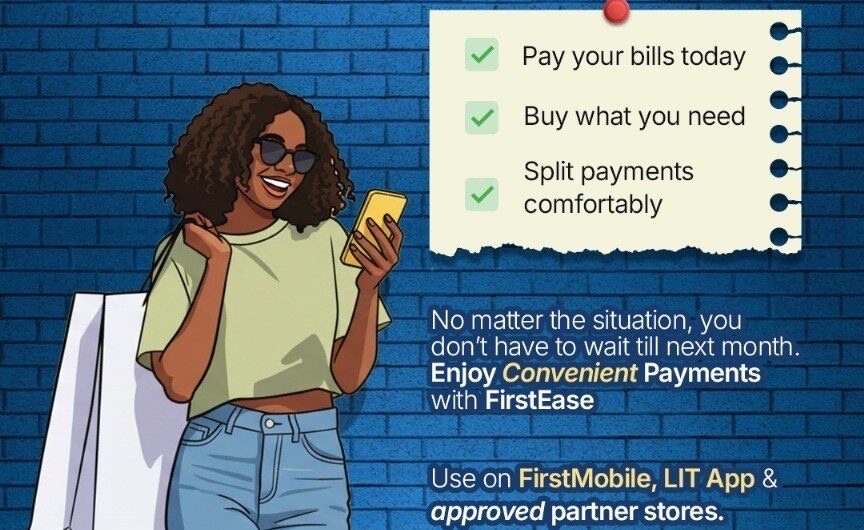
Many Nigerians find it hard to buy a new smartphone, laptop, television, refrigerator, or other important household items. This is especially true when you have to pay the full price all at once. The same issue can pop up when an unexpected bill for electricity, data, or cable comes in during a month when cash is tight.
This is where FirstEase comes in. FirstEase is FirstBank’s answer to the growing Buy Now, Pay Later (BNPL) trend. It gives eligible customers a chance to buy selected products and services while spreading the payments over time.
FirstEase is a digital lending service. It allows customers to shop, pay bills, and split payments over an agreed period. There are two main parts to this offer: FirstEase for online shopping and FirstEase for bill payments.
This product is especially helpful for salary earners and other eligible customers who want more flexible ways to manage their purchases. With FirstEase, customers can shop and pay bills through digital channels and approved merchant platforms without going to a physical bank branch.
One of the best features of FirstEase is its e-commerce option. Customers can buy eligible products from participating FirstBank partner merchants and pay for them in installments instead of paying the full amount upfront.
Some of the partner e-commerce platforms and merchants include Ringaz, Chamuze, Pointek, Webuyam, Electromall, Uwana Energy, and a partnership with Klump, which includes merchants like Jumia, Konga, and ShopAhome.
Products available through these partner merchants include smartphones, laptops, tablets, televisions, refrigerators, washing machines, microwaves, sporting equipment, gadgets, and other essential items.
This means if a customer needs a device for work, a television for home entertainment, or an appliance that can’t wait, they can consider a structured payment option instead of saving up the whole amount.
For online purchases, customers must make a minimum 30 percent down payment. The remaining balance is financed through FirstEase. The e-commerce option has a repayment period of up to six months, with monthly payments scheduled around the customer’s payday. The maximum loan amount is ₦1 million.
FirstEase is not just for shopping. The bill payment side lets eligible customers access financing when paying bills through the FirstMobile and LIT App. On the apps, customers choose a biller, enter the details, and switch on the FirstEase option before completing the payment.
Bills like electricity, data, cable, airtime, and other related services can be paid using this feature.
With FirstEase bill payment, there’s no down payment required. The minimum amount for a transaction is ₦1,000, while the maximum is ₦200,000, with a repayment period of 30 days.
This difference makes the two options useful for different situations: one is for buying products through partner merchants, while the other offers financing directly during bill payments.

The whole process is mostly done through digital channels. For an e-commerce transaction, a customer picks a product, goes to checkout, chooses FirstCheckout, and then selects FirstEase. The system checks the customer’s account number, assesses eligibility, and allows the customer to select a preferred repayment period. The down payment, monthly installment, and other repayment details are shown before the customer accepts and completes the transaction.
FirstEase uses credit checks and affordability assessments as part of its eligibility process. The product details include a multi-step assessment that looks at FirstBank’s credit and customer records, account activity, salary account status, and a valid BVN. Third-party scoring and advanced AI models are also used before giving an eligibility result.
Credit risk and machine-learning models are used to determine personalized eligibility amounts for both e-commerce and bill payment options.
The appeal of Buy Now, Pay Later is mainly about timing. It allows customers to access a product or service when they need it while spreading the financial burden over time.
For e-commerce FirstEase, there is a three percent interest charge per installment on a reducing balance, along with a two percent one-off insurance charge at disbursement and a FirstCheckout fee of 1.2 percent, capped at ₦2,000. For bill payments, there is a five percent monthly interest charge and a three percent monthly insurance charge.
Customers receive repayment information and reminders. FirstEase includes automated collection and repayment features, and customers get SMS and email reminders before due dates. They can also check their outstanding debt through the available mobile channels.
This setup combines convenience with repayment discipline. Customers need to understand the charges, repayment dates, and terms before accepting any offer.
At its heart, FirstEase shows a change in how consumers can access funds for everyday needs. Instead of seeing credit just as cash in an account, the product links financing directly to the purchase of a product or payment of a bill.
FirstBank explains that FirstEase differs from a regular consumer loan by its point-of-sale financing structure, faster approval process, and direct connection with partner merchants.
For customers, the message is clear: if you meet the eligibility requirements, FirstEase offers another way to manage costs for important purchases and selected bills without needing to pay the full amount right away.
As digital use and online shopping continue to change how Nigerians buy and pay for services, FirstEase fits financing into that digital journey. It goes from choosing a product or bill to completing the transaction, getting goods delivered, and managing repayment.
In a market where flexibility is becoming just as important as access, FirstEase is making Buy Now, Pay Later more than just a payment option. It is FirstBank’s way of helping customers make purchases and meet their needs quickly.



Drop your comment
No comments yet — be the first to drop the gist 👇