
A government shows its commitment to women not just by announcing empowerment programs but by creating real chances for women to earn, lead, and change their communities. By this standard, Governor Dapo Abiodun's efforts in Ogun State show a clear focus on women’s empowerment.
Under Abiodun, women’s development has become part of the State’s wider economic and social plans. From support for livelihoods and skills training to financial inclusion and leadership roles, the government has a simple belief: Ogun cannot grow if its women are held back economically or kept out of decision-making.
The scale of this effort backs up that belief. Under his leadership, Ogun State, with help from the World Bank-supported Nigeria for Women Project, has empowered around 100,000 women directly. Official reports show the formation of 8,759 Women Affinity Groups with 247,273 women across the State’s 20 Local Government Areas. These numbers highlight different aspects of the program and should not be confused with one another.
The main goal of the policy is to give women a chance to create sustainable livelihoods. The Oko’wo Dapo program shows this approach. Relaunched in 2022, it initially gave grants to 2,094 women. By January 2026, Governor Abiodun noted that over ₦5 billion had been spent on women’s livelihood programs in six years, ₦3 billion through the World Bank initiative and another ₦2 billion from Ogun State. By then, Oko’wo Dapo had reportedly empowered around 55,000 women.
These figures should not be added up directly because different programs may serve the same women. Their importance lies in the scale and ongoing public investment.
The Governor’s plan to make Oko’wo Dapo a statewide Women’s Trust Fund could create a lasting framework for this effort, as long as it has strong governance, transparency, and measurable results.
Abiodun has also shown his commitment through strategic partnerships. During First Lady Mrs. Oluremi Tinubu’s recent visit to Ogun State, Governor Abiodun provided institutional support and coordinated with the State Government. This strengthened the link between Ogun’s women-focused initiatives and the First Lady’s national programs for women’s economic empowerment and social inclusion.
The broader impact of this agenda is that boosting women’s economic power also helps households and communities stay stable. Women play key roles in family welfare, farming, trade, and local economies. Improving their livelihoods can help families face economic challenges and lessen their risk of exploitation, trafficking, and other social issues.
This does not mean poverty causes crime. It recognizes that expanding real economic opportunities is part of preventing problems and ensuring human security.
This idea fits into the Governor’s ISEYA agenda, Infrastructure, Social Welfare and Wellbeing, Education, Youth Development, and Agriculture and Food Security where women are key players and beneficiaries.

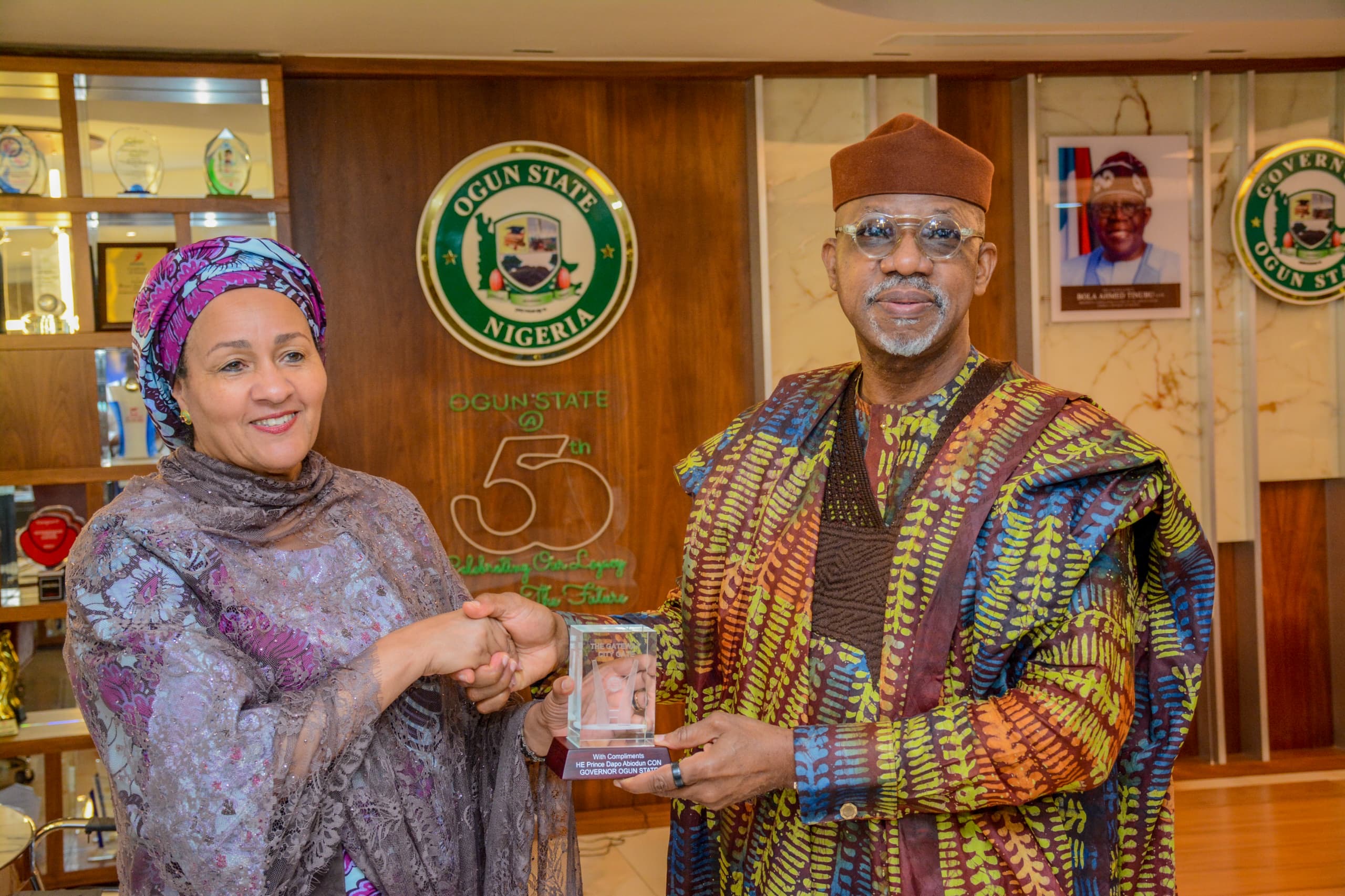

Abiodun’s commitment to women goes back before the current Nigeria for Women Project. The administration’s 2020 Budget Speech mentioned that Ogun’s involvement in Federal Government programs had given direct jobs and empowerment chances to over 3,090 women. Women and young people were also highlighted as priority beneficiaries of agricultural and livelihood programs, including the FADAMA Graduate Unemployed Youths and Women Scheme.
This ongoing effort is crucial. It shows that the women’s agenda is not just a one-time action but part of a larger plan to boost women’s economic chances and strengthen their role in Ogun’s development.
But for Governor Abiodun, progress should not stop with economic gains. Women need opportunities to be part of decision-making.
His government has opened doors for women to serve in the State Executive Council, State House of Assembly, National Assembly, and various boards and agencies. These roles are not just about representation; they give women power, visibility, and chances to influence policies and public issues.
This mix of economic chances and including women in institutions adds more value to the women’s agenda. It sees women not just as beneficiaries but as entrepreneurs, professionals, policymakers, community leaders, and partners in governance.
The real measure of this policy should be its lasting effects: stronger businesses, improved incomes, better financial inclusion, more secure homes, and greater involvement of women in public life.
The proposed Women’s Trust Fund could help solidify these achievements and create a lasting foundation for the next steps.
Looking at all this, it’s clear: give women the economic support to thrive and the space to lead.
That is what Governor Abiodun's women agenda is about, an investment in women as economic players, community builders, and leaders, ultimately strengthening families, stabilizing communities, and boosting Ogun State.




Drop your comment
No comments yet — be the first to drop the gist 👇