A major dispute happened in Nigeria 63 years ago about how constitutional conventions can decide or end the terms of top political leaders. The Judicial Committee of the Privy Council said conventions were “a body of understandings which no writer can formulate.” This decision nearly brought the country to chaos.
This year, the Nigerian Bar Association (NBA) is at a critical point. It must decide how much these conventions, meant to support national diversity in leadership, can be turned into tools for ethnic groups that are not part of its official structure. The impact on the association could be significant.
The NBA holds elections for its leaders every even-numbered year. There is a long-held belief that “the NBA is too important to be left alone.” Elections have turned into a political arena where various interests, many outside the legal field, compete. This year, the biggest topic is the influence of ethnic groups within the NBA.
The events leading to this situation were triggered by a series of unrelated incidents. On 14 August 1991, Taslim Elias passed away. He was Nigeria’s Attorney-General at independence when that title was rightfully called “honorable” (thus HAGF). He later became Chief Justice of Nigeria. At the time of his death, he served as a judge of the International Court of Justice (ICJ). Nigeria nominated Bola Ajibola, a Senior Advocate of Nigeria (SAN), to take over Elias's remaining term at the ICJ.
This nomination created a need for a new HAGF. Military leader Ibrahim Babangida chose Clement Akpamgbo SAN to fill that position. Akpamgbo was also serving as the 15th president of the NBA at that time. To follow the NBA's constitution, its first Vice-President, Priscilla Kuye, took over as president after Akpamgbo. She was the first woman to hold that position.
The next elections for the NBA's leadership were set for 1992. Members gathered in Port Harcourt, Rivers State, in August for the elections. Unfortunately, the meeting ended in chaos. Five years later, as military rule began to fade, the NBA was revived.
After that crisis, the NBA made two major changes to its leadership process at the start of the new millennium. First, it ended universal voting among its members, replacing it with a delegate-based system. In 2015, universal voting returned. Second, it began a convention of rotating key leadership roles among the country’s three founding regions, Eastern, Northern, and Western regions.
After 15 years, the NBA added this rotation rule to its constitution, stating that “the Association shall for the purpose of elections of National Officers be divided into three geographical zones namely, Northern zone, Eastern zone and Western zone.” The president, three Vice-Presidents, and General-Secretary rotate among these zones. The NBA constitution also says that eligibility for these roles is based on where candidates are from, not where they work.
The constitution goes on to say that “where a position is zoned to any particular geographical zone, the position shall be rotated and held in turn by the different groups and/or sections in the geographical zone.” Yet, it does not specify who gets to decide about these zoning and micro-zoning arrangements.
This has led to a situation where various ethnic interest groups of lawyers, like the Arewa Lawyers Forum (ALF), Eastern Bar Forum (EBF), Egbe Amofin Oodua (Egbe), Middle-Belt Lawyers Forum (MBLF), and Mid-West Bar Forum (MWBF), are involved. These groups are not official parts of the NBA. They act as ethnic caucuses trying to influence the competition for positions within the NBA. Until now, their influence has been mostly informal, based on unwritten rules.
In 2018, when the NBA presidency went to the east, the EBF backed Arthur Obi-Okafor, SAN as their candidate. But Paul Usoro, who also came from the same region, won the election.
In 2026, the NBA presidency shifts back to the west. The Egbe and MWBF are active in this region. This election cycle, the MWBF chose not to put up any candidates for the presidency, allowing lawyers from the six states of south-west Nigeria to take the lead.
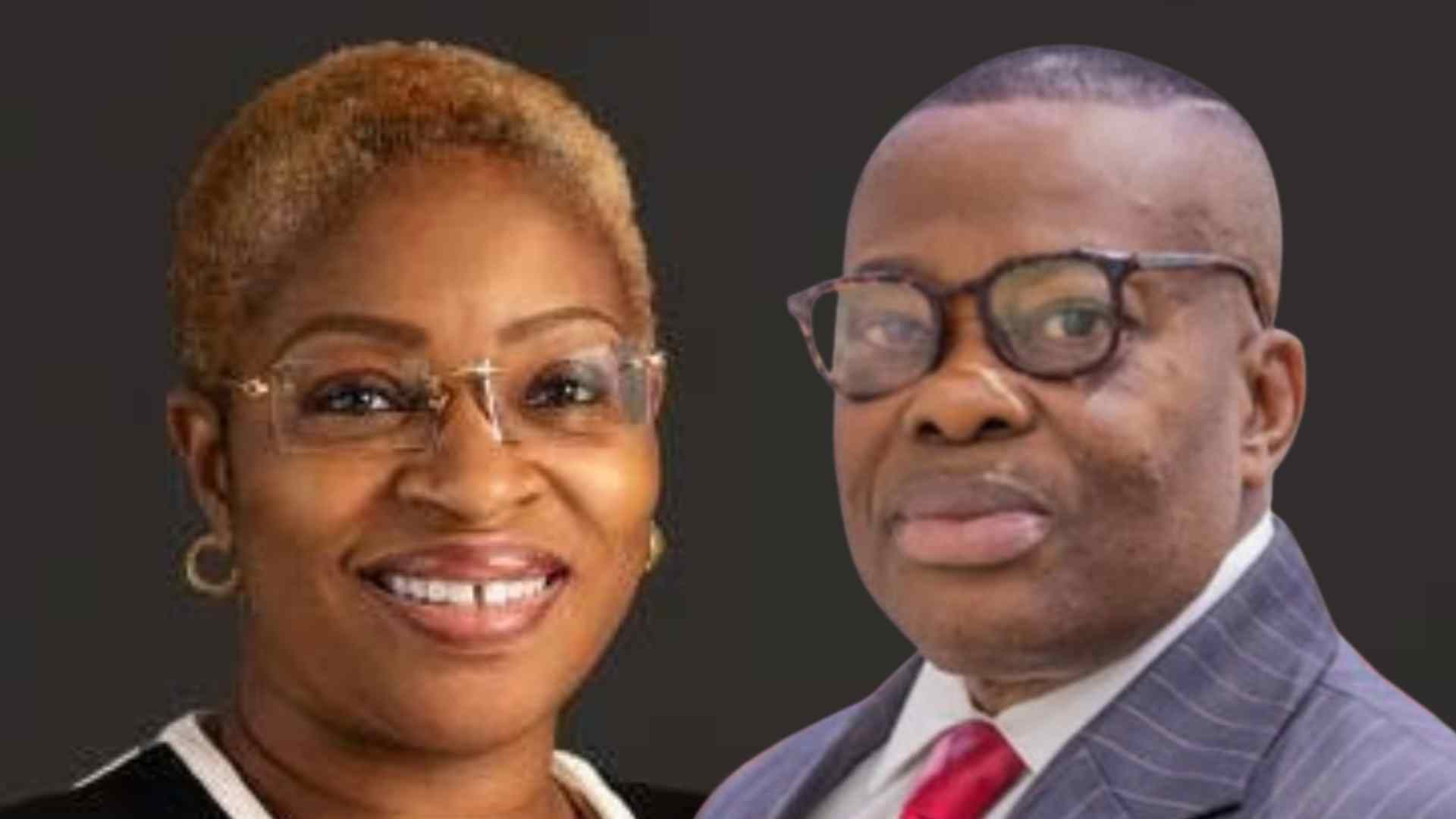
The Egbe claims it should lead the process for those in the region wanting to run for the presidency. This year, they proposed Muyiwa Akinboro SAN as their candidate. However, Yemi Akangbe SAN and Oyinkan Badejo-Okusanya, SAN, both from the same region, did not withdraw their ambitions. The Egbe insists it micro-zoned the position to the part of south-west where Mr. Akinboro is from and wants the NBA to exclude the other candidates so he can win without contest.
The micro-zoning the Egbe mentions has existed since 2019. In the 2020 election for a president from the western region, both Dele Adesina SAN and Tunde Ajibade SAN came from outside this micro-zone. In 2008, Rotimi Akeredolu SAN won unopposed as the 24th NBA president by convincing other candidates to withdraw. The ethnic argument put forth by the Egbe this year would be unprecedented.
Facing expected pushback, the association took legal action at the High Court in Ibadan to force its agenda. The court quickly issued interim orders against the NBA election process. The NBA appealed. On 11 June, the Attorney-General of the Federation, a defendant in the Ibadan suits, held a meeting with the disputing parties and former NBA presidents.
The meeting created a subcommittee led by Wole Olanipekun SAN, the 20th NBA president. It included Lanke Odogiyan and Paul Usoro SAN, the 22nd and 29th presidents, but there is disagreement about its purpose.
An unsigned report from Olanipekun and Odogiyan claims they were set up to find out “the causes of the present conflicts within the NBA” and suggest a way forward to the HAGF. Paul Usoro disputes this, saying the subcommittee was only meant to help the HAGF achieve a settlement as promised to the Court of Appeal.
The Olanipekun-Odogiyan report offers many recommendations. It asks for the elections to be postponed to August and wants to include the National Identification Number (NIN) as a voter ID. They claim that the enrollment number assigned by the Supreme Court to every lawyer in Nigeria “is not a security number.” They also want to end universal suffrage in the NBA and support the Egbe's micro-zoning. Paul Usoro disagrees with many of these points.
The key recommendations from the report clash with each other.
If the Olanipekun-Odogiyan report had looked into the issue, it would have found that the necessary bureaucratic work to integrate NIN into the lawyer identification system can only happen with the Supreme Court and the National Identity Management Commission (NIMC) working together. This won't be done by August “or soon thereafter.” By suggesting impossible conditions, that report seems to aim at allowing the current leadership to end, just like the military did in 1992.
Instead of taking his proposals to the parties or the Court of Appeal, the HAGF mostly supported the Olanipekun-Odogiyan report and backed its recommendations in a flawed document titled “Directions and Outcomes.” But even he could not agree with the Egbe's push to enforce its ethnic preference in this election cycle.
On 8 July, the Court of Appeal rejected his attempt to sidestep the ongoing cases. The court's decision is awaited.
Meanwhile, the NBA's leadership election is likely to go ahead as planned on 18 July under court protection. Two positions will be filled without contest, while eight will be contested. Last time, in 2024, there were 72,071 eligible voters. This time, on 18 July, there will be 82,213 eligible voters, marking a 14.07% increase. This is the largest number in the history of the NBA.
Drop your comment
No comments yet — be the first to drop the gist 👇