For many years, global health funding relied on the idea that money from outside would keep increasing as developing countries needed more health support. But that idea is now uncertain. Issues like money problems in donor countries, changing political priorities, and recent disruptions to health programs are changing how health partnerships get money and are managed. Nigeria needs to get ready for this change while keeping the progress made through these partnerships.
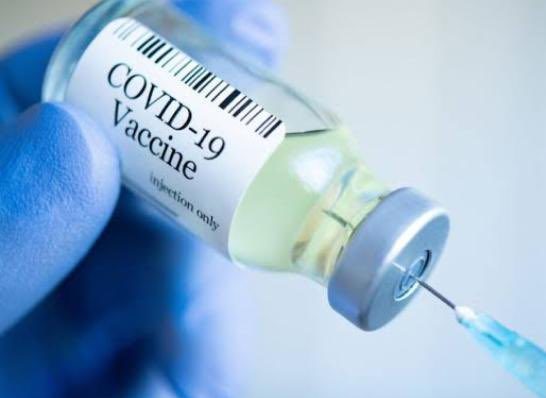
This is very clear in immunisation. Nearly 10 million babies are born in Nigeria every year. Each group of newborns needs to get the vaccines already scheduled, while new vaccines are added only when there is enough evidence and capacity in the health system. Since Nigeria has one of the biggest birth rates in the world, it is among the most challenging places for immunisation.
In this situation, Gavi’s support of about US$500 million from 2026 to 2030, announced during a meeting with President Tinubu, is a great help. This money will help pay for vaccines, improve delivery and monitoring, maintain cold storage, and reach children who are not getting services regularly. This support works through Gavi’s co-financing model, where governments pay a part of vaccine costs and take on more as their capacity increases. Under Gavi 6.0, the strategy for 2026-2030, country leadership and long-term sustainability of national immunisation programs are key to how support is given.
Nigeria has already co-financed vaccines more than many countries in Gavi’s program. Over the years of the partnership, more than US$500 million has come from Nigeria’s own funds. This level of commitment shows Nigeria’s population size and a regular schedule of nearly 13 vaccines; vaccines thus become some of the biggest expenses in the budget of the Federal Ministry of Health and Social Welfare.
This funding shows the importance President Bola Ahmed Tinubu’s administration places on immunisation, maternal and child health, and primary healthcare. To keep up this commitment as the program grows, funding from both federal and state levels must be balanced. The Federal Government has usually covered most of the co-financing costs, while states are expected to provide the workforce, facilities, transport, and community outreach needed to get vaccines to children. A lasting funding plan should, therefore, reflect this shared responsibility.
This balance is increasingly important with every new vaccine introduced since each one creates a continuing obligation as new groups of children become eligible. Each new vaccine needs to be evaluated not just by the disease burden, but also by fairness, cost, and how well the health system can deliver it consistently. Expanding the vaccine schedule without ensuring reliable coverage would defeat its purpose.
In this context, domestic funding has gradually increased under President Tinubu. Health represented about 3.48 percent of the federal budget when he took office; it increased to 4.3 percent, then about 5.28 percent, and reached 6 percent of the 2026 budget, net of liabilities. Although Nigeria still has greater needs, this growth builds a stronger local base over time instead of relying on promises that cannot be upheld.
These funding decisions are linked to how the overall health system is set up. The Nigeria Health Sector Renewal Investment Initiative (NHSRII) was created to address a system where priorities, funding, and implementation were often scattered across many separate programs. It provides a framework for the government to set national priorities, align states and partners with them, and connect resources more clearly to outcomes.
External help has greatly contributed to Nigeria’s health improvements, often through separate plans, procurement channels, contractors, and reporting systems. These programs saved lives and built key capabilities, but they also caused fragmentation, duplication, and limited visibility across the sector. This left national institutions with responsibilities but without the necessary systems, data, and funding to maintain them.
The Sector-Wide Approach (SWAp) was introduced to change that trend. Under the Health Sector Renewal Compact, the Federal Government, all 36 states, the Federal Capital Territory, and development partners have agreed to work from one national plan, one budget, and one reporting system. Since Nigeria’s health system is decentralized, national progress still relies on local performance; this reform gives the federation a shared direction while making responsibilities, resources, and outcomes easier to track.
The HOPE for Quality Primary Healthcare (HOPE-PHC) program puts this approach into action by linking funding to measurable improvements in primary healthcare at the state level.

Within that framework, domestic financing has risen incrementally under President Tinubu. Health represented about 3.48 percent of the federal budget when the administration began; it moved to 4.3 percent, then about 5.28 percent, and reached 6 percent of the 2026 budget net of liabilities. Although Nigeria’s needs remain greater, this progression establishes a stronger domestic base over successive budgets instead of resting policy on promises that cannot be sustained.
These increases aim to support better services, stronger financial protection, and improved population health. Achieving that goal needs proper planning, steady funding, disciplined procurement, and clear reporting, so Nigerians can see how more health investment connects to medicines in stock, working facilities, frontline workers, and protection from high costs.
We expect Gavi’s commitment to give Nigeria more than just vaccines bought over five years. By 2030, fewer children should miss routine immunisation, differences between states should decrease, and federal and state governments should have a clearer and more lasting way to share ongoing costs. Data, supply chains, and program management should also be more securely placed within Nigerian institutions.
As domestic funding increases, it should also change what Nigeria buys and what it can produce. Replacing donor money with public money to import the same products would leave Nigeria vulnerable to foreign-exchange issues, supply interruptions, and production decisions made elsewhere.
This is why President Tinubu started the Presidential Initiative to Unlock the Healthcare Value Chain (PVAC). This program covers pharmaceuticals, vaccines, biologics, diagnostics, medical devices, logistics, and health technology. Its goal is to reduce dependence on imports by attracting investment into local production and building a stronger healthcare economy.
Making vaccines requires a lot of technical expertise and needs capital, technology transfer, regulation, quality assurance, and steady demand over many years. Nigeria has the market to support this investment, but success will depend on combined procurement, development finance, strong regulation, and credible technology partnerships working together. Gavi’s increasing support for African vaccine manufacturing can help countries willing to build that capacity on solid commercial and regulatory foundations.
We expect Gavi’s commitment to leave Nigeria with more than just the vaccines purchased over five years. By 2030, fewer children should miss routine immunisation, differences between states should narrow, and federal and state governments should have a clearer and more durable way to share ongoing costs. Data, supply chains, and program management should also be more securely placed within Nigerian institutions.
The Gavi funding, rising domestic budgets, and the push for local production are all parts of one reform plan under the NHSRII. This approach helps Nigeria build a health system where international cooperation supports national needs and local institutions take on more responsibility.
This shift is happening amid limited public funds, uneven financial capacity among states, and rising costs for essential goods. Meeting these challenges will need careful setting of priorities, greater efficiency, and a steady rise in domestic funding without weakening the services people rely on.




Drop your comment
No comments yet — be the first to drop the gist 👇