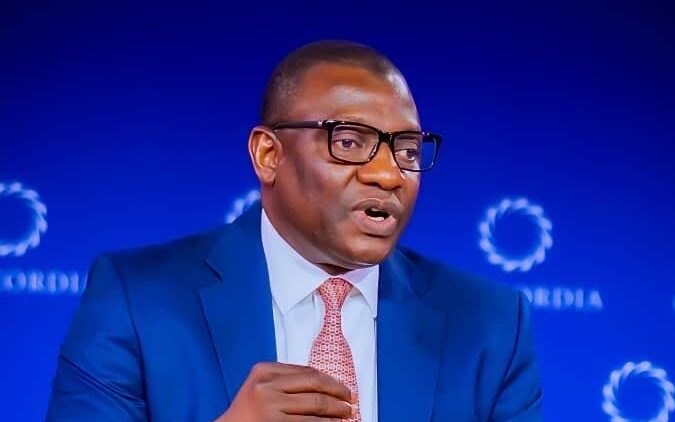
The CEO of World Energy Council Nigeria, Bala Wunti, has called on the Federal Government to turn Nigeria’s 44 important minerals into factories, jobs, and lasting economic opportunities for citizens.
Wunti warned that Nigeria should not repeat the mistake of exporting raw materials while importing finished products at much higher costs.
He made this statement at the 2026 Concordia Annual Summit, held at the Sheraton New York Times Square during the United Nations General Assembly.
Wunti was part of a panel discussion titled, “Rare Currency: Critical Minerals in a Shifting Global Economy.” This panel looked at America’s increasing reliance on imported minerals and China’s control over global mineral processing.
The former Chief Upstream Investment Officer at the Nigerian National Petroleum Company Limited stated that Nigeria must stop just exporting minerals and start developing local processing and manufacturing.
“For half a century, Nigeria exported crude oil and imported refined petroleum products. That created poverty, not prosperity. We will not repeat that mistake with lithium and rare earth elements,” he said.
Wunti explained that Nigeria has not fully tapped into its mineral resources because of major issues. He pointed out the lack of reliable geological data and well-structured projects as key challenges.
“The central issue is the difference between mineral potential and an investable project,” he said.
“We had geological indications, but not proven reserves supported by JORC compliant data. We also had good policies, but not clearly defined projects. Investors invest in projects, not potential.”
He mentioned that to attract private investment in mining, Nigeria needs reliable geological data, well-defined projects, proper infrastructure, stable regulations, credible developers, and good routes to market.
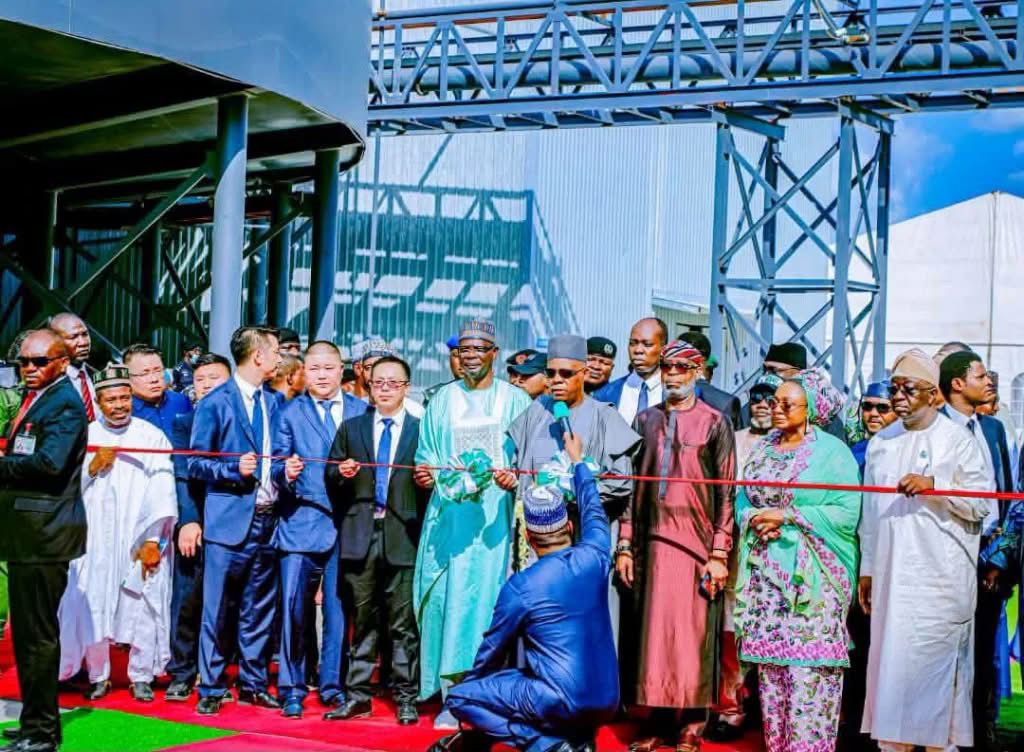
Wunti called the Nigerian Solid Minerals Company the country’s main investment platform. He said this company aims to turn mineral resources into bankable projects.

“The company is moving Nigeria from saying, ‘We have minerals,’ to showing investors defined projects and clear business opportunities,” he stated.
“Rare earth elements are not necessarily rare in the ground. They are rare in the market. To bring them to market requires capital and technology.”
Wunti added that Nigeria must offer commercially viable deals to investors instead of just relying on policy papers and promotional pitches.
“We must move from potential to bankability. Investors need real transactions, not presentations. Give me a credible price, and I will provide private capital,” he said.
He noted that private capital is crucial for funding most critical mineral projects. The government must create a better environment that lowers investment risks.
“Government must tackle issues like geological uncertainty, unstable regulations, poor infrastructure, and slow permitting,” he said.
“However, the government can only make a project bankable. It cannot turn a project that is not profitable into a successful one.”
Wunti pointed out four conditions needed to attract sustainable investment in the mining sector: JORC compliant geological data, viable prices, a stable and competitive fiscal system, and credible buyers.
“The lesson is price, not pitch,” he said. “A price floor of $110 per kilogram gives investors commercial certainty. That is how Nigeria can attract processing facilities, create jobs, and keep more value from its mineral resources.

Drop your comment
No comments yet — be the first to drop the gist 👇