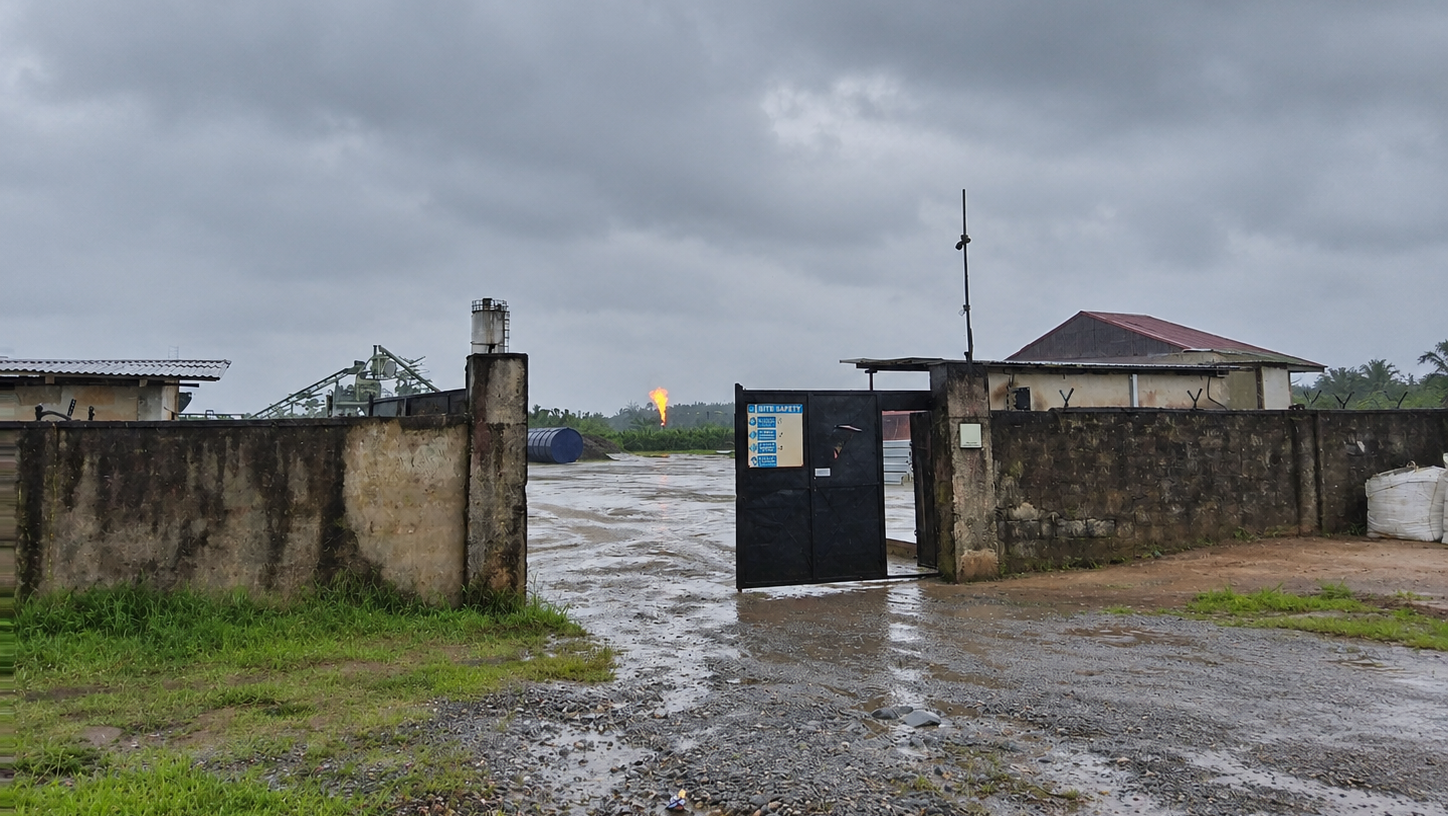
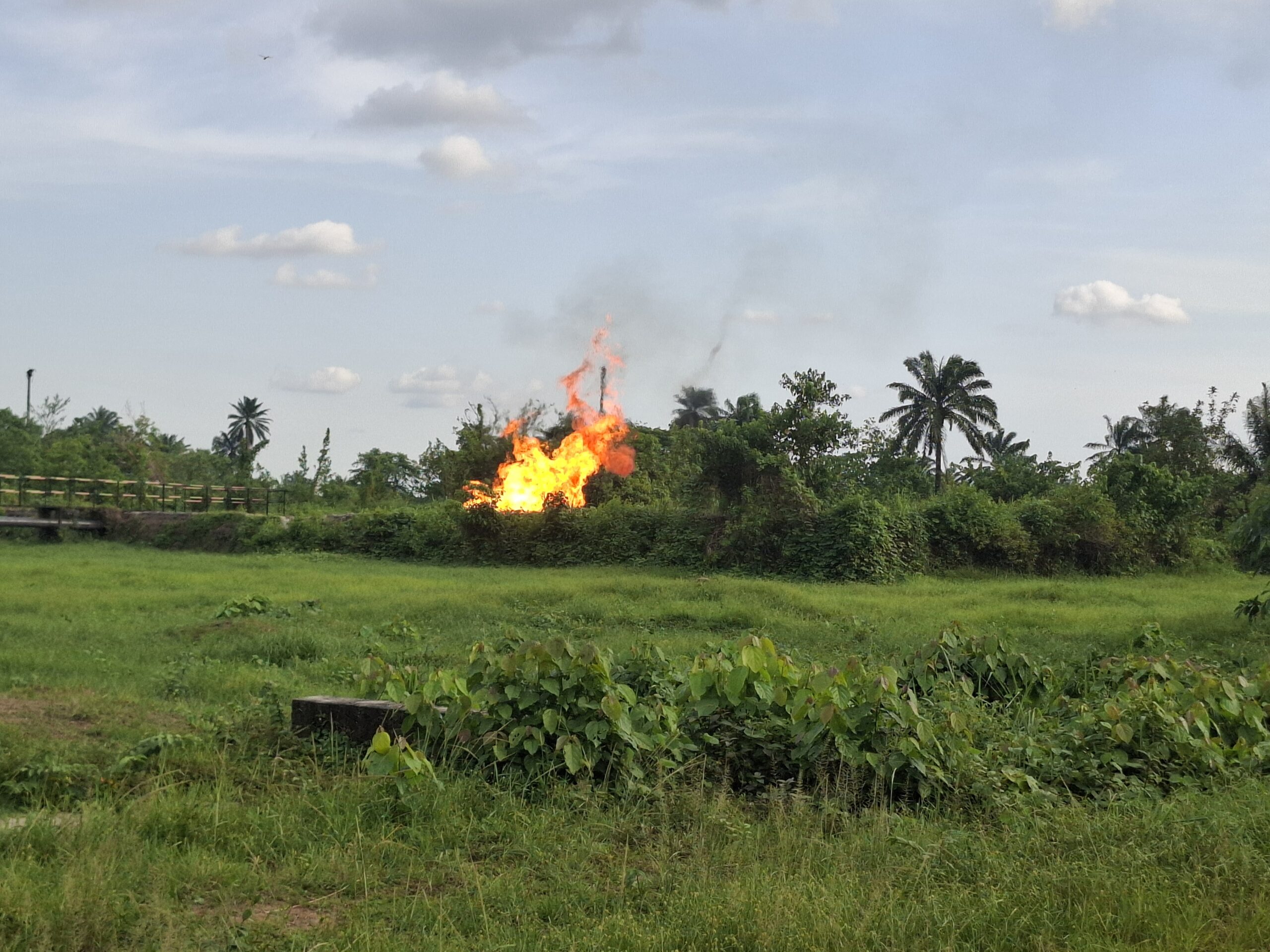
The fire at Inua Eyet Ikot never stops. Day and night, a flare stack run by Network Exploration & Production Nigeria gives off an orange light in this oil-rich community in Akwa Ibom State, sending out heat as it burns.
"That’s how the fire burns nonstop," said Sunday Okon, a security guard who works a kilometer from the stack. "It can be really hot here, and sometimes you feel the vibration."
Closer to the flames, Idiok Godwin, a local bricklayer, shares his story. "We cannot use rainwater here, and some nights it can be very hot," he said. "People get ill too."
These issues highlight a problem in Nigeria’s oil and gas industry. While Nigeria promotes itself as an environmental leader, creating strict rules on pollution, gas flaring continues to rise. The country has promised to end gas flaring by 2030, but the reality is different.
Flaring is increasing, driven by weak enforcement of rules and oil companies passing off old assets to local firms without taking responsibility for emissions. Nigeria is burning more gas now than it did three years ago.
Methane is the main part of the gas released during oil production. When burned, it turns mostly into carbon dioxide, but some unburned methane escapes through incomplete flaring, venting, and leaks from old infrastructure.
Although it does not last long in the atmosphere, methane is a dangerous pollutant. It traps about 80 times more heat than carbon dioxide over a 20-year period.
Experts say cutting methane emissions is the quickest way to slow global warming. Nigeria produced 16 percent of sub-Saharan Africa’s methane emissions from oil and gas between 2010 and 2020, according to the Natural Resource Governance Institute.
On paper, Nigeria is committed to cutting these emissions. In 2021, the government signed the Global Methane Pledge and introduced the Petroleum Industry Act. This act empowers the Nigerian Upstream Petroleum Regulatory Commission (NUPRC) to manage operators and stop gas flaring. Nigeria joined the ranks of countries like the EU, America, Canada, Germany, and Japan in this pledge.
New rules in 2022 and 2023 required companies to fix leaks, track emissions carefully, and make annual public reports on flaring penalties. Nigeria’s climate plan promises to cut methane emissions from oil and gas by 60 percent by 2031, end gas flaring by 2030, and achieve net-zero emissions by 2060. The latest update pushed the 60 percent target to 2035.
But in reality, not much has changed. World Bank data analyzed by Pluboard shows that after years of reductions, Nigeria’s flaring volumes have increased. Operators flared 6.6 billion cubic meters of gas in 2025, up from 6.1 billion in 2024 and 5.1 billion in 2023, with flaring intensity also rising.
In April, the NUPRC admitted there are "technical and infrastructural gaps" in monitoring emissions. They pushed the deadline for better measurement systems to 2026 and 2027.
When asked about oil companies’ progress, NUPRC spokesperson Eniola Akinkuotu told Pluboard that firms are meeting disclosure rules. "It is a regulatory requirement, and all companies have to abide," he said. The commission did not confirm specific progress on the new measurement rules.
But how oil companies followed methane and flaring rules is revealing. When Shell claimed in 2025 that it had stopped routine flaring and kept methane intensity below 0.2 percent, it relied heavily on accounting tricks.
From 2016 to 2023, over 60 percent of Shell’s reported emissions reductions came not from cleaning their operations but from selling off their Nigerian assets.
Before selling those fields, Shell admitted in its 2024 Energy Transition Strategy report that about half of its global flaring happened in Nigeria.
When oil companies sell their assets, pollution just changes hands. Satellite data from SkyTruth, using information from the Colorado School of Mines, showed that in Oil Mining Lease (OML) 17, flaring jumped sevenfold from 2020 to 2024 after its sale.
At the Oyigbo field, flaring grew 15 times during the same time. In Agbada, flaring doubled right after the sale; in Nkali, it nearly quadrupled in a year.
The United Nations’ International Methane Emissions Observatory supports these findings. Of 21 confirmed methane hotspots in the Niger Delta logged between May 2024 and May 2025, 12 were on assets sold by AGIP to local firm Oando, with nine hotspots in OML 61.


As emissions rise, reporting does not improve either. The Nigeria Extractive Industries Transparency Initiative (NEITI) found that in its first upstream greenhouse-gas audit in 2024, only 15 out of 62 companies submitted data.
Forty-seven companies claimed they had no data, and only 20 confirmed they had a climate policy. Major players like Aiteo, Seplat, Oando, and Eni’s local subsidiary did not disclose any data.
Though federal law allows NEITI to penalize companies that do not comply, no sanctions have been applied. "This poor compliance rate poses a significant risk to Nigeria’s ability to meet its national climate change commitments," NEITI warned.
While NEITI reported a sector-wide compliance rate of just 24 percent for 2024, the NUPRC claimed it was 54 percent. Akinkuotu noted that companies may not have a legal obligation to share data with NEITI, only with the regulatory body.
TotalEnergies promises globally to keep methane intensity below 0.1 percent for commercial gas produced. Neither of its two Nigerian ventures were among the 15 companies that disclosed to NEITI.
Chevron aims to "keep methane in the pipe" and plans to stop routine flaring by 2030. Its reported emissions fell 99.8 percent in one year, from 173.6 million kilograms to around 266,000, a decrease NEITI said needs verification.
Heirs Energies reported 217.4 million kilograms of methane in 2023 after buying OML 17, one of the largest single-year figures in NEITI’s records, with no baseline data for 2022.
Seplat, now Nigeria’s largest local operator, says it "continues to closely monitor and reduce emissions" through "proper designs" and "prompt maintenance of scrubbers." The company stated it ended routine flaring in its onshore Western Assets in 2025: flare volumes there fell from 9 percent of produced gas in 2024 to 3 percent by the fourth quarter of 2025.
Its Eastern Assets, including Ibeno, only started this process in early 2026. The company claims it "consistently complies with all applicable regulatory reporting and disclosure requirements."
Internationally, the situation is not better. Of 153 global energy firms in the UN-backed Oil and Gas Methane Partnership, only three are Nigerian. The state-owned NNPC has never filed a disclosure, Chevron’s submission received the lowest transparency ranking, and no local upstream operator has joined the partnership.
For communities living near these oil fields, the lack of regulation has serious consequences.
From January 2020 to May 2026, operators in Akwa Ibom State flared about 35.9 billion standard cubic feet of gas, according to the National Oil Spill Detection and Response Agency.
That is $125.8 million in wasted fuel, 1.9 million tonnes of carbon dioxide released, and $71.9 million in penalties. This energy could have produced around 3,600 gigawatt-hours of electricity.
On its website, Network Exploration & Production states it aims to stop flaring by 2027 and reduce carbon intensity by 50 percent by 2030. Messages and calls seeking their comments on progress went unanswered.
Health studies in Ibeno show drops in lung function, changes in blood parameters, and weakened immune responses among residents exposed to constant flaring. A wider 2026 study across the Niger Delta linked flaring exposure to higher rates of childhood respiratory issues, coughs, and poor nutrition.
In Inua Eyet Ikot, where the air is heavy with heat from the nearby stack, Idiok Godwin has stopped expecting help from the government or oil companies.
"There is nothing we can do about it," he said. "We just keep managing."

Drop your comment
No comments yet — be the first to drop the gist 👇