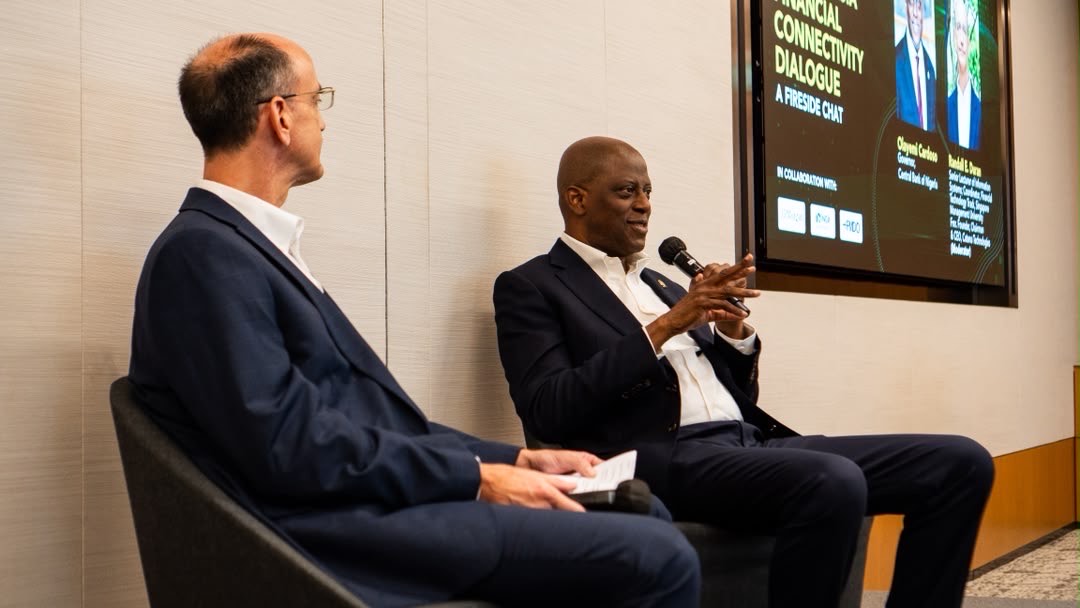
The Nigeria-Asia Financial Connectivity Dialogue took place in Singapore this week. J P Morgan hosted this event, bringing together government officials, market leaders, and investors. They discussed the progress of Nigeria's reform program and the priorities that will shape its future. The main message was clear: Nigeria's reform journey is moving from crisis management to a phase where results can be measured and built upon.
During the conversation, the CBN Governor, Olayemi Cardoso, explained that Nigeria's economic changes are not just reactions to immediate market pressures. Instead, they represent a major shift in how the economy is set up for long-lasting growth. He stressed the need for credibility, resilience, and the structural changes needed to win back investor confidence.
Cardoso emphasized that stability is now more than just a policy goal. It is a proven result. He said, "We have a situation where we’ve been tested for resilience. We’ve been tested for credibility." This is important because it moves the discussion from short-term market ups and downs to whether Nigeria has the right institutions to support long-term growth.
The Governor pointed out how the currency performed during times of global trade issues, political tensions, and election-related worries. He used this as proof that the reform framework is getting stronger. Cardoso said that the financial system has handled pressures that would have caused bigger market disruptions in the past. He believes this resilience shows that reforms are starting to take effect.
Cardoso also admitted that the benefits of reforms will take time to reach everyday people and businesses. But he said that ignoring structural problems would only lead to more serious issues down the road. "We’ve done the plumbing works," he stated. "Having done the plumbing works now, we are confident that whatever goes on top of that will be something that will be sustainable."
This confidence links back to the larger investment story. Cardoso claimed that stable macroeconomic conditions are crucial for attracting investment, creating jobs, and growing the private sector. He said, "Without getting the macros in place and without ensuring the stability, you don’t get investment. And without investment, you don’t get growth." This means credibility is not just a policy goal; it is a national asset.
A key part of the discussion was Cardoso's focus on financial technology as a growth area. He described Nigeria's fintech scene as lively and increasingly important across Africa, calling it a major driver of economic change.
Cardoso talked about a regulatory approach focused on collaboration instead of exclusion. He said the CBN aims to work directly with fintech companies to understand their challenges and create regulations that allow innovation to thrive. The message was clear: regulation should protect the system while still allowing growth.
This approach reflects a broader view of Nigeria’s transformation. It shows that the reform agenda is not just about fixing the economy but also about building the infrastructure needed for future success. By treating fintech as a critical growth area, the CBN is indicating that innovation is key to the economy's next stage.
Cardoso noted that Nigeria and Singapore have complementary strengths. Singapore shows how good governance and a supportive investment climate can help a smaller nation gain global influence. Nigeria, on the other hand, has scale, a large market, a youthful population, and access to wider African opportunities.

"What we bring to the party is scale," he said. This means Nigeria's advantage is not only in policy but also in the size of its market, demographic profile, and access to broader African chances.
Cardoso stated that better cooperation, business engagement, and financial market connections could help turn these strengths into more investment and trade. He emphasized that Nigeria's transformation goes beyond local reforms; it aims to position the country as a more credible and connected player in global finance.
For investors, the message is straightforward. Nigeria's reform achievements are creating a space where long-term capital can invest with more confidence. The focus on resilience, credibility, and structural reform shows a story grounded in real outcomes, not just talk.
"The serious investors," he said, "should not wait for the ship to have sailed and then wake up and decide that this is the time to come on board."
These reforms represent more than just policy defense. They signal Nigeria's potential. They show that the country is building a system that can deliver results, making Nigeria's credibility harder to overlook.
In the past, Nigeria's economic story was filled with volatility and uncertainty. Structural problems often went unaddressed.
Now, the larger significance of this change is that it alters how Nigeria is seen internationally. A more credible policy environment, stronger banks, and deeper markets not only improve economic numbers. They also enhance Nigeria's reputation in the global financial community, making it easier for investors to plan, businesses to operate, and capital to flow confidently.
The key takeaway is that Nigeria's reform story is no longer just about managing crises. It is about positioning the country for a new growth phase, where results are backed by evidence and credibility is strengthened by outcomes. This is now the basis for Nigeria to hold its head high in the global financial scene.


Drop your comment
No comments yet — be the first to drop the gist 👇