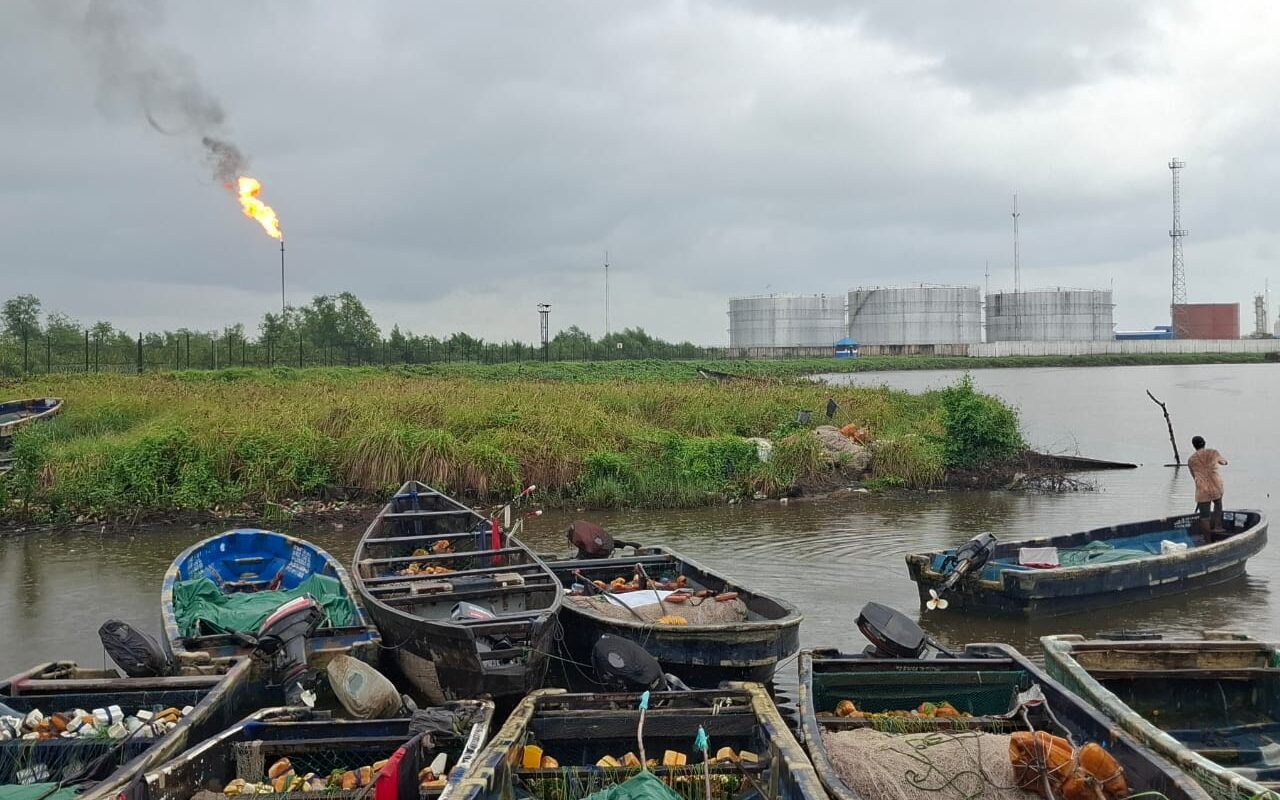
When Nigeria passed the Petroleum Industry Act (PIA) in August 2021, it aimed to fix one of the country’s long-standing environmental issues and cut down methane and other emissions.
For years, different governments promised to stop gas flaring and cut other methane emissions.
The PIA did not just depend on penalties. It set up a legal framework for planning, commercialization, and regulatory enforcement.
A key requirement was that every natural gas producer had to prepare a Natural Gas Flare Elimination and Monetisation Plan (FEMP) showing how they would stop gas flaring.
The law also gave the Nigerian Upstream Petroleum Regulatory Commission (NUPRC) the power to take flare gas and hand it over to investors who can turn it into useful products like electricity, liquefied petroleum gas (LPG), compressed natural gas (CNG), and fertilizer.
Nearly five years after the Act began, PREMIUM TIMES found that the implementation of the law has not met expectations.
This investigation looked into whether NUPRC, the body in charge of enforcing Nigeria’s anti-flaring laws and reducing methane emissions, has done its job.
The findings show that the biggest challenge to ending gas flaring and cutting methane emissions is the failure to carry out the law.
Regulator Missed Deadline
Section 108 of the PIA states that every licensee or lessee producing natural gas must submit a Natural Gas Flare Elimination and Monetisation Plan within 12 months of the Act’s start date.
The law started in August 2021. This means operators had until August 2022 to submit their plans. But the rules needed to guide the creation of those plans were not ready.
The NUPRC only signed the Gas Flaring, Venting and Methane Emissions (Prevention of Waste and Pollution) Regulations in May 2023, almost two years after the PIA started.
The regulations were officially published in July 2023, but by then, the twelve-month timeline set in the Act had already passed by 11 months.
Instead of following the timeline in the Act, Section 3(2) of the regulation set a new deadline, giving companies six months from the start of the regulation to submit their FEMP.
With this new deadline, the NUPRC reset the clock outside the August 2022 deadline from the Act. This brings up a legal question. Can a regulation from an agency extend a deadline set by an Act of the National Assembly?
To understand the implications, PREMIUM TIMES spoke to Ekemini Udim, a lawyer from Akwa Ibom.
He said the NUPRC’s delay has weakened the law’s enforcement. "It is disturbing that a provision of an Act of the National Assembly could be frustrated like this," he said.
"The Act clearly expected that regulations would already be in place before the deadline for submitting FEMP."
According to him, the responsibility lies with the regulator. "The companies can argue that they were waiting for the commission to issue the needed regulations. If the commission had acted quickly, companies would have had no excuse."
Mr Udim said this failure should be seen more as a regulatory failure than a corporate one.
"It is the commission that failed to set up the legal structure within the timeline set by Parliament."
Mr Udim’s interpretation raises uncomfortable questions. If the regulator missed the deadline created by the PIA, can it fairly punish companies for delays that came partly from its own inaction?
On 28 July, PREMIUM TIMES sent a detailed media enquiry to Eniola Akinkuotu, the Head of Media and Strategic Communications at NUPRC. We asked why the regulations were issued almost two years after the PIA started and if the delay led to operators not complying.
The commission acknowledged receiving the enquiry. When reminded on 4 August, its spokesperson said the questions had been sent to the relevant departments and that answers were being compiled.
No substantial response has been received by the time of this report.
NUPRC Took Four Years to Act
Long before the first permit was issued under the revived Nigerian Gas Flare Commercialisation Programme (NGFCP), the PIA had already given the NUPRC power over flare gas.
Section 105(2) of the Act states that the commission "shall have the right to take, free of charge, natural gas that is destined to be flared at the flare stack."
Instead of allowing operators to burn associated gas into the air, the law allows the regulator to take ownership of that gas and give it to investors who can turn it into electricity, cooking gas, CNG, fertilizer, and other products.
This legal structure aims to stop gas flaring and unlock economic value from a resource that has burned away for decades.
The 2023 Gas Flaring, Venting and Methane Emissions Regulations strengthened these provisions by outlining how the commission could exercise them.
Yet PREMIUM TIMES reported that the NUPRC only issued flare-gas permits in December 2025 to 28 companies, over four years after the PIA became law.
During that time, millions of standard cubic feet of associated gas continued to burn every day, and improperly burned gas kept emitting methane across the Niger Delta’s oil fields.
On 28 July, PREMIUM TIMES asked NUPRC for the flare sites given to each of the 28 companies, the operators connected to those sites, and the effective dates of each permit.
The newspaper also asked how much flare gas had been captured and commercialized from the issuance of the permits to 30 June 2026. NUPRC did not provide this data. Checks on the 28 companies with active websites did not yield this information.
However, NUPRC’s latest warning on 8 September to revoke permits for gas flare site awards over non-utilization suggests that the law to take gas meant for flaring may not have achieved the desired results four years after it was passed.
PREMIUM TIMES reported that the commission has said it will revoke permits where investors do not show significant progress in using the gas flare sites.
Regulations to Publish Vented Gas Data Not Followed
The PIA and the 2023 regulations from NUPRC did not only regulate operators. They also placed duties on the commission itself.
Section 23 of the Gas Flaring, Venting and Methane Emissions (Prevention of Waste and Pollution) Regulations requires the commission to prepare and publish an annual report on the implementation of the regulations.
This must include clear information on gas flaring and venting by producers, including the total volume of disposed gas, split into flared gas and vented gas, shown as a percentage of natural gas produced.
The report is to be published by 30 June each year for the previous calendar year.
PREMIUM TIMES checked the commission’s 2023 and 2024 Annual Financial and Operational Performance Reports. While both reports contain a lot of information on gas flaring, they do not provide data on gas venting.
Unlike flaring, where methane is at least partly burned, venting involves the direct release of natural gas into the air. Scientific studies show that venting is the biggest source of methane emissions from upstream oil and gas operations.
Besides not publishing venting data, the reports are also not timely. Contrary to the 30 June deadline, as of 27 August 2026, NUPRC had not published its report for 2025, missing the deadline by more than a month.
PREMIUM TIMES asked the commission why it missed the publication deadline and why venting data required under the regulations had not been shared. The commission said it would provide answers in due time.
The delay means the public cannot check the country’s methane performance through venting for the most recent reporting year, despite rules requiring yearly disclosure.
The reporting gaps from NUPRC also leave a big question about Nigeria’s climate commitments: If methane emissions are not fully and timely reported, how can progress toward reducing them be tracked?

Methane: Emissions Nigeria Struggles to Measure
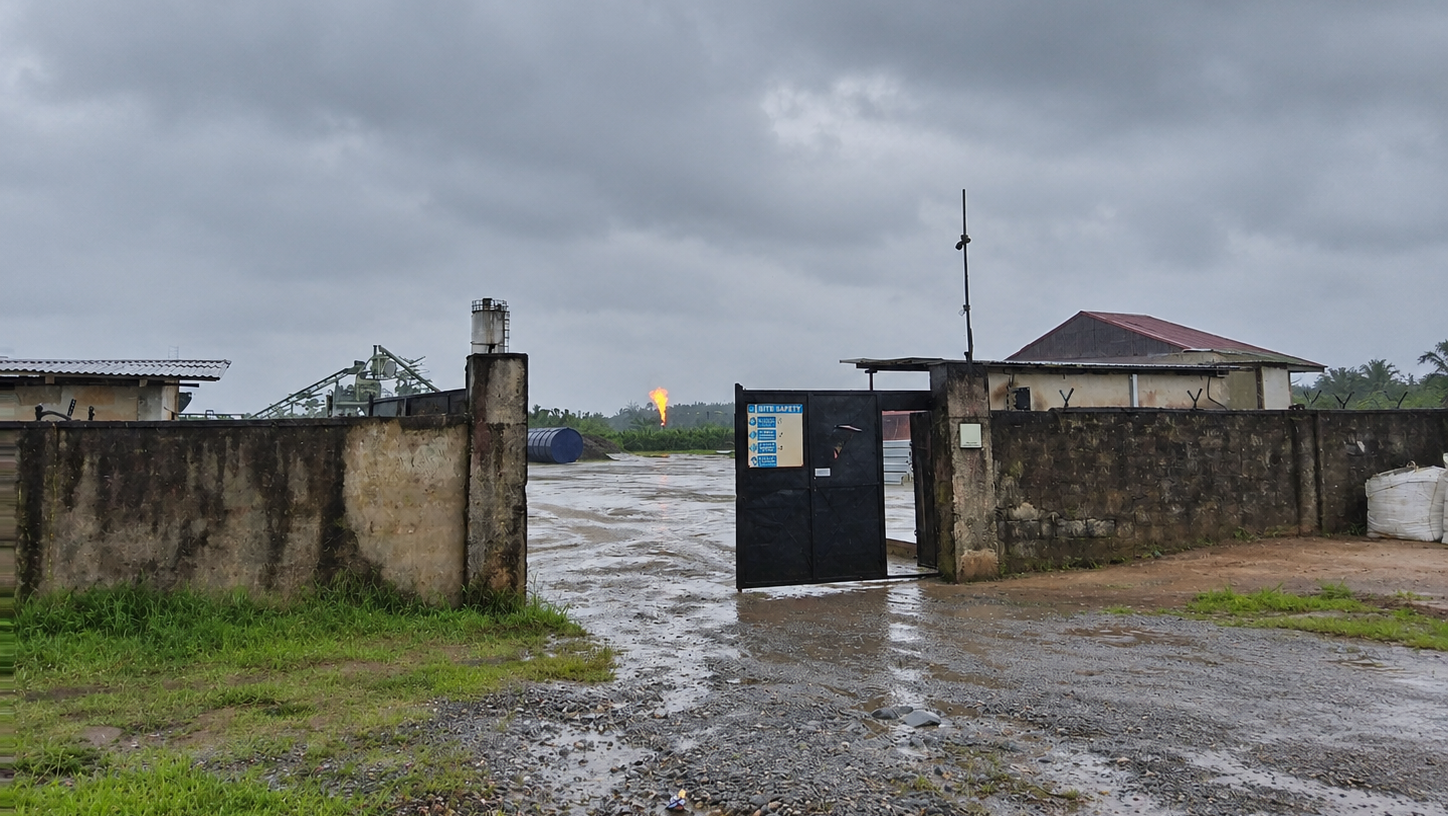
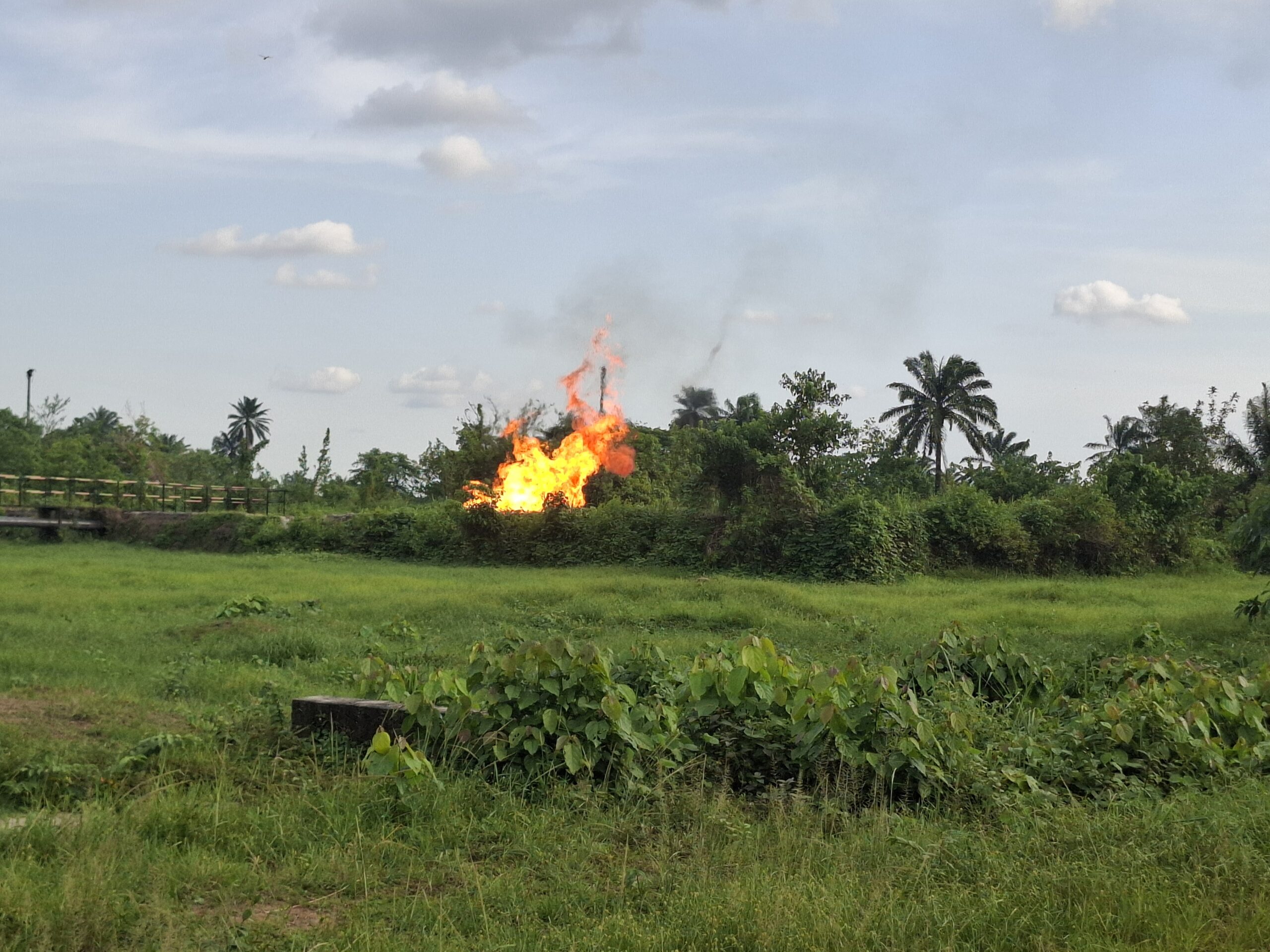
If gas flaring is the most visible sign of pollution from Nigeria’s oil industry, methane is its least visible and most dangerous.
Unlike flare stacks that light up the night sky, methane escapes quietly.
It leaks from valves, compressors, pipelines, and storage facilities. This is known in the industry as fugitive emissions. It is also released through venting during maintenance and operational activities. It can also escape through incomplete flaring, which happens when flare stacks do not burn associated gas effectively.
Scientists view methane as one of the most powerful greenhouse gases that drive climate change.
Over a 20-year period, methane traps more than 80 times as much heat as carbon dioxide, making even small releases significant for the climate.
Recognizing this threat, Nigeria placed itself among African countries aiming to cut methane emissions.
The country signed the Global Methane Pledge, committed to ending routine gas flaring, and set ambitious methane-reduction targets in its Nationally Determined Contributions submitted under the United Nations Framework Convention on Climate Change.
Nigeria, which currently leads Africa in methane pollution, accounting for 16 percent of total sub-Saharan African methane emissions from the oil and gas sector between 2010 and 2020, aims to reduce methane emissions from the oil and gas sector by 60 percent between 2031 and 2035 and cut fugitive methane emissions by 95 percent by 2050.
These commitments formed the basis for the Guidelines for the Management of Methane and Greenhouse Gases in the Upstream Oil and Gas Sector issued by NUPRC in 2022.
The following year, the commission strengthened those requirements through the Gas Flaring, Venting and Methane Emissions (Prevention of Waste and Pollution) Regulations.
The regulations require operators to create methane inventories, implement Leak Detection and Repair (LDAR) programs, maintain Fugitive Methane Emission Data (FMED), submit Greenhouse Gas Emission Management Plans, keep daily flaring and venting records, and work to eliminate routine flaring.
But putting these demands into action has been tough, and NUPRC has publicly acknowledged this. In an official directive issued on 11 April 2026, NUPRC admitted that implementing Nigeria’s methane guidelines has faced major challenges.
The commission cited what it called "technical capacity limitations and infrastructural Measurement, Reporting and Verification (MRV) gaps" among operators.
MRV systems are key to greenhouse gas regulation. Without accurate measurement, reporting, and verification, regulators cannot know if companies are reducing emissions or just guessing.
The commission acknowledged that these problems have affected the implementation of the methane guidelines.
To tackle the issue, it directed operators to use standardized reporting templates for Greenhouse Gas Emissions Management Plans and greenhouse gas inventories.
It also instructed companies to report emissions using the Intergovernmental Panel on Climate Change Tier 2 methodology starting in the third quarter of 2026 before shifting to the more accurate, measurement-based Tier 3 methodology by January 2027.
This admission shows that nearly three years after the methane regulations took effect, Nigeria is still trying to set up the systems needed to measure emissions accurately. This points out that the current methane data is still based on engineering estimates rather than direct field measurements.
The Programme Lead for Energy, Extractive and Climate Justice of Policy Alert, Edidiong Dickson, says that this limitation makes it hard to know if Nigeria is really reducing methane emissions.
When Reporting Becomes Optional
The commission’s own annual reports also show problems in getting environmental information from operators.
In its 2024 Annual Financial and Operational Performance Report, NUPRC noted some of its main challenges: late submission of Greenhouse Gas Emissions Management Plans, failure by operators to submit greenhouse gas inventories, lack of technical capacity for methane leak detection, and shortages of specialized greenhouse gas service providers.
These findings match what PREMIUM TIMES found during this investigation.
Frontier Oil admitted that it had not submitted Fugitive Methane Emission Data to the commission even though it was required. It also noted that no punishment followed. The lack of response from Sterling Oil, Aradel Holding, and Heirs Energy to PREMIUM TIMES’ enquiries raises doubts about their compliance.
NUPRC has not publicly shared the names of companies that failed to submit required methane reports nor published records of enforcement actions against defaulting operators.
This lack of transparency makes it hard to know if environmental rules are being applied fairly across the industry.
From Environmental Penalty to Government Revenue
If the gaps in implementation are one challenge, another is what happens after companies flare and vent gas.
The PIA treats gas flaring and venting as an offence.
Section 104 states that operators who flare or vent natural gas must pay set penalties.
But the Act went further than earlier regulations by recognizing that host communities suffer the environmental impact of gas flaring and venting. Section 104(4) states that gas-flaring penalties should go towards environmental cleanup and support for the host communities where gas is flared.
However, this changed earlier this year when, in February 2026, President Bola Tinubu issued an Executive Order directing that gas-flaring penalties be paid into the Federation Account.
The federal government argued that keeping the money outside the Federation Account limited revenues available for national distribution.
Mfon Gabriel, an environmental expert and Executive Director of the Peoples Empowerment and Ecosystem Restoration Foundation, said, "that decision reclassified gas-flaring penalties as part of government revenue, making companies see flaring no longer as an offence but as a means to contribute to government revenue."
"If the government starts to view gas-flaring penalties mainly as revenue, it raises a concern that stopping gas flaring becomes less appealing financially, leading to more emissions while the host communities and the environment suffer."
According to NUPRC’s 2024 operational report reviewed by PREMIUM TIMES, although N700.75 billion had been collected as gas flare penalties from 2021 to 2024, liabilities from gas flaring went over $936 million.
These figures on liabilities raise another question about accountability.
Section 104(2) of the PIA states that penalties should be paid like royalties.
In Nigeria, operators must pay royalties monthly after the month of production.
The ongoing presence of hundreds of millions of dollars in unpaid liabilities raises questions beyond collection and enforcement. It brings into doubt whether flaring and venting are still viewed as penalties for pollution, considering that the penalties sometimes can be paid at convenience, resulting in these liabilities.
For environmental advocate and Coordinator of Peace Point Development Foundation, Umo Isua-Ikoh, the bigger issue is that “the government should not get comfortable collecting penalties while flaring continues.”
“The goal should always be to eliminate gas flaring, venting, and fugitive emissions, thus reducing methane emissions so that our planet won’t face a climate crisis that humans, especially in the global south, cannot recover from due to global warming.”
Regardless, this investigation shows clear gaps in enforcing the PIA and other related regulations.
Despite the legal framework, in community after community visited during this investigation, residents judged those laws by their lived experiences.
Their stories show that climate governance is measured by whether regulations issued change conditions on the ground and help reduce the climate change affecting their communities.


Drop your comment
No comments yet — be the first to drop the gist 👇