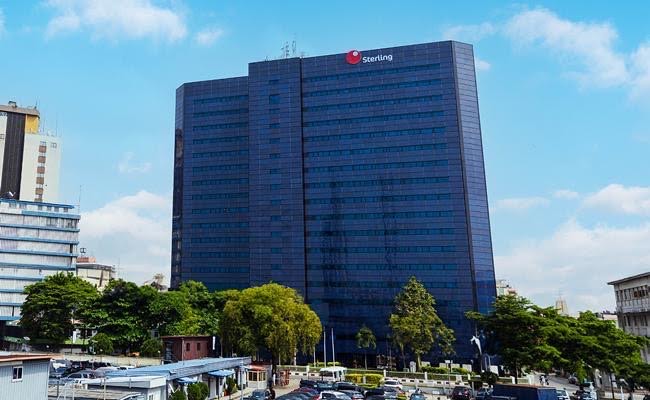
Sterling Financial Holdings Company Plc, known as Sterling Financial, is starting its approved share capital restructure. The company will merge every ten existing ordinary shares into one new ordinary share. This move aims to improve the efficiency of its capital structure, support growth, and make the company more appealing to both institutional and retail investors.
Sterling Financial is making this change after a good first half of the year, where profit after tax rose by 20.4 percent to ₦50.3 billion, while gross earnings hit ₦279.6 billion. The company’s total assets grew to ₦4.67 trillion, and shareholders’ funds went up by 27.8 percent to ₦547.7 billion, thanks to the capital raise. This restructuring is part of the company’s plan to optimize its share structure for better earnings growth and returns.
To carry out this restructuring, trading in the Group’s shares on the Nigerian Exchange Limited (NGX) was temporarily stopped on Wednesday, 23 September 2026. This suspension will last for up to ten working days, until Wednesday, 7 October 2026. This pause allows the Central Securities Clearing System Plc (CSCS) and Pace Registrars Limited to update the shareholder register. The company will announce when trading will resume once the process is complete and confirmed by NGX. All services across the Group’s subsidiaries, Sterling Bank, The Alternative Bank, and SterlingFI Wealth Management, will continue as normal.
Sterling Financial believes that the new share structure will create better price formation and attract more investors. With regular financial updates, the restructuring aims to make it easier to evaluate performance per share over time and to compare it with other companies in the sector.
A higher price per share is also part of the Group’s strategy to reflect its earning potential, capital strength, and growth opportunities more accurately. The improvement in valuation will depend on how well the company performs, returns on capital, investor interest, and market conditions. The price adjustment does not increase the actual value of the business.
Shareholders gave their approval for the restructuring at the Annual General Meeting on 9 June 2026. All necessary regulatory approvals have been received, and the Federal High Court confirmed the share reduction order on 22 September 2026.
With the new structure, the number of issued ordinary shares will drop from 68,502,331,708 to 6,850,233,171, each still worth 50 kobo. The issued share capital will go down from about ₦34.25 billion to ₦3.43 billion, with around ₦30.83 billion moved to a Share Reconstruction Reserve. This change does not affect the total shareholders’ funds. It is not a new capital raise or cash payout.

For individual shareholders, if you have 10,000 existing shares, you will receive 1,000 reconstructed shares, along with a tenfold adjustment to the reference price. This keeps the value of your investment the same at the time of adjustment. The actual trading prices may change when trading resumes.
Voting and economic rights will stay in line with the new holdings. If a holding does not divide evenly by ten, whole shares will be credited, and any fractional part will be grouped with other fractions for sale. Shareholders will receive their share of the sale proceeds.
Shareholders will keep their dividend rights. Future dividends, when declared, will be based on the new share structure. The restructuring does not affect how future dividends are calculated.
The conversion to the new share structure happens automatically. No application or payment is needed. Shareholders with valid CSCS accounts and stockbroker details will see their new shares credited electronically. Those with physical certificates should contact Pace Registrars and a licensed stockbroker for help in converting their shares into electronic form.
CSCS keeps electronic records of securities, and a Clearing House Number (CHN) identifies each investor in the system. Holdings without valid CSCS account details will be left with Pace Registrars under a non-tradeable Registrar Identification Number until the process is completed. Shareholders should contact the registrar to update any outdated or incomplete records.
Investors with pending transactions during the suspension should check with their stockbroker and the registrar on how the record date and settlement cut-off apply to their shares. After the adjustments, shareholders should confirm their new balances through their stockbroker, CSCS, or Pace Registrars, and report any discrepancies quickly. Information about fractional entitlement proceeds and payment will also be available from the registrar.


Drop your comment
No comments yet — be the first to drop the gist 👇