Can Africa fix the bias it says the Big Three credit rating agencies show against African countries? The African Union (AU) and other groups on the continent think this bias causes African nations to get low ratings. This raises their borrowing costs and slows down development.
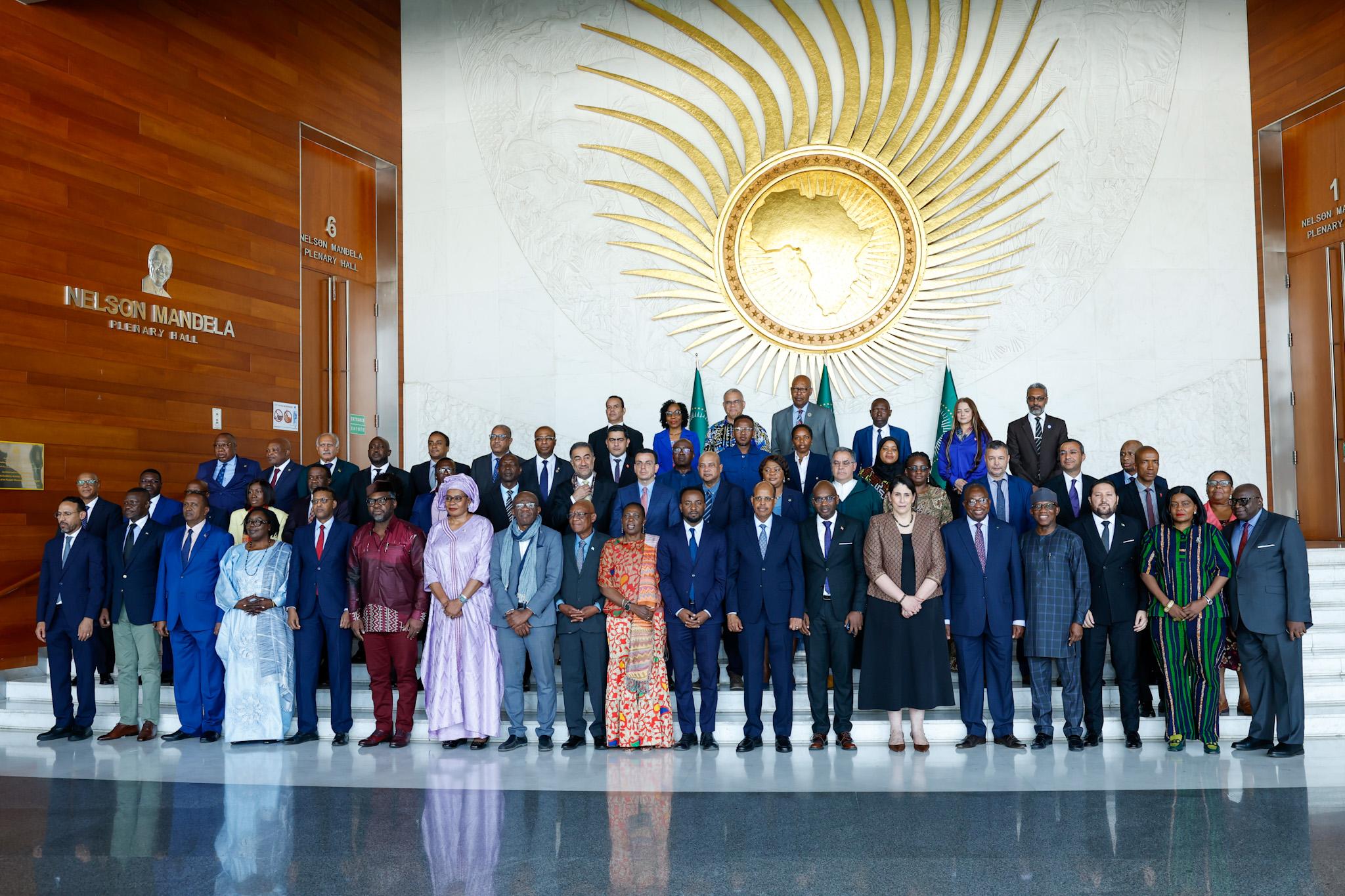
In February 2025, the AU announced it would start its own Africa Credit Rating Agency (AfCRA) in Mauritius. “Africa is no longer content to be a passive observer in this discourse,” said AU African Peer Review Mechanism Chief Executive Officer Marie-Antoinette Rose-Quatre last September. “We are taking ownership of our narrative and driving forward meaningful, homegrown solutions.”
African countries usually get lower ratings from the Big Three credit agencies: Standard and Poor’s (S&P), Moody’s, and Fitch. These are all American companies. In 2025, only Botswana, Morocco, and Mauritius had investment-grade ratings. South Africa, Côte d’Ivoire, and Benin were rated just below investment grade. The other 49 African countries were rated much lower. Some countries are not rated at all, leaving them out of capital markets.
But saying the Big Three rate African countries lower than developed nations does not automatically mean there is bias. The Big Three claim they use the same criteria for all countries, and African nations just happen to score lower.
The Big Three share these criteria, which are mostly the same. They look at economic strength, governance, civil society, and the effectiveness of monetary and macroeconomic policies. An April report from the Konrad-Adenauer-Stiftung (KAS) and the Leibniz Institute for Economic Research said some measures, like GDP and debt ratios, are objective. But others, like governance strength, are subjective. This could lead to bias based on how much weight credit rating agencies give to each factor.
The report pointed out that even some objective measures are not favorable to African nations. For instance, the Big Three focus on GDP per capita, which can hurt poorer countries. These countries are not encouraged to improve their economic situations.
The report highlighted a wide range of incomes around the world. In 2023, incomes ranged from $511 in the Democratic Republic of the Congo (DRC) to $98,700 in Ireland. The authors suggested that most African countries would need to boost their per-capita income to that of Mauritius, which is $10,552, to see any improvement in their ratings.
Additionally, a 2025 United Nations Trade and Development report showed that the Big Three required developing countries to hold more reserves compared to developed ones. This made it harder for developing nations to invest in higher-yield opportunities.
The KAS-Leibniz report used a complex formula to show that there is bias. It found that the Big Three underrate African countries by an average of 0.5 to 1 notch. This may not seem like a lot, but it is important.


Last month, a seminar from Chatham House and KAS explored how an African credit rating agency could change financing conditions on the continent. Moody’s Marie Diron suggested there was no bias in their ratings. She mentioned that Moody’s studied 40 years of debt defaults globally. She said, “If our ratings were biased, you would expect to see, for a given rating level, that the probability of default for an African sovereign is lower than for a sovereign elsewhere in the world.” Moody’s found a “perfect alignment” between African countries and others.
The bigger question is whether an African credit rating agency could solve the problem, regardless of bias from the Big Three. Chatham House Senior Research Fellow David Lubin said that portfolio managers use credit ratings to decide on investments. He noted that AfCRA might only help investors choose within Africa.
He questioned if AfCRA was just Africa “marking its own homework.” Why would pension fund managers or company executives trust an African credit rating agency to be objective?
Development Reimagined CEO Hannah Wanjie Ryder said credit rating agencies could consider other factors. She mentioned the efforts African governments make to avoid defaults. She also pointed out that AfCRA would understand African economies better, including the importance of the informal sector.
But there are not many success stories for new regional credit rating agencies. In 2012, the KAS-Leibniz report noted that the European company Scope started issuing ratings to compete with the Big Three. They were seen as biased against Europe. Yet, Scope’s global market share is still below 1 percent and has not reduced credit costs for European issuers.
The AU, KAS-Leibniz report, and Chatham House discussions agreed that for AfCRA to succeed, it must be independent and transparent. It should act as a private company with no ties to the AU or African governments. It also needs to ensure its ratings are open to external review.
Even if AfCRA does not improve financial conditions with its ratings, it can help African governments and other entities work towards better credit ratings. This includes helping the Big Three understand African circumstances and being more open in their assessments of African credit risks.

Drop your comment
No comments yet — be the first to drop the gist 👇