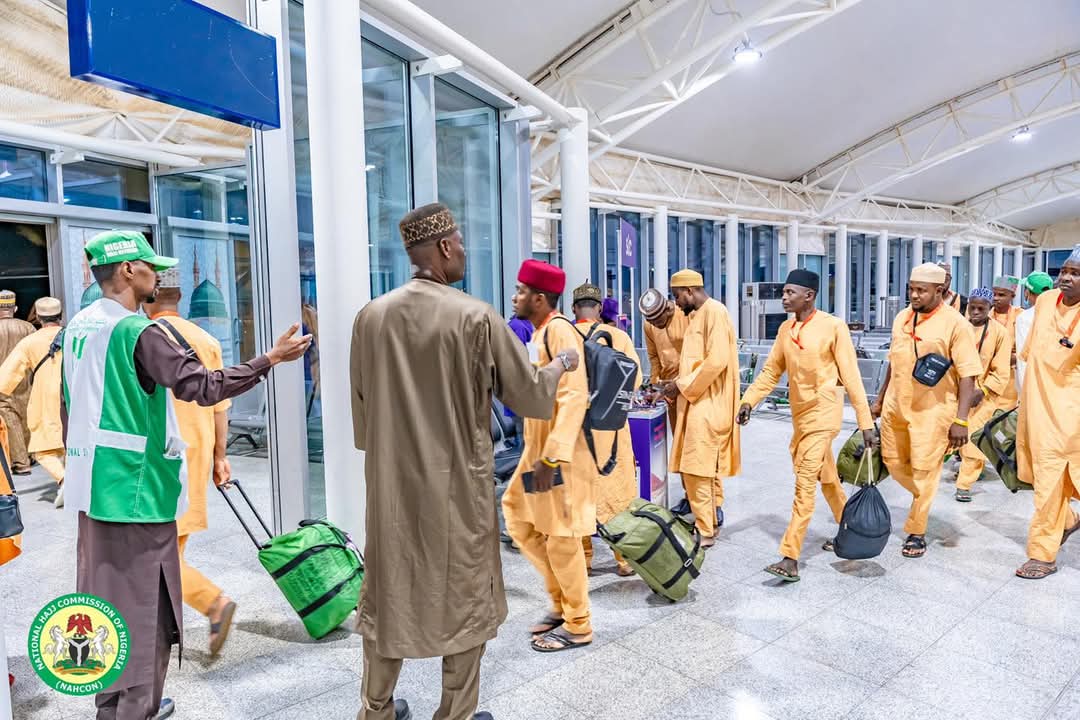
The National Hajj Commission of Nigeria (NAHCON) has defended its decision to allocate 15,000 slots to private Hajj tour operators for the 2027 pilgrimage. They say this allocation follows Nigerian laws and guidelines from Saudi authorities, and only licensed operators under seven approved lead companies received the slots.
NAHCON also urged these private tour operators to meet the latest requirements from the Saudi Ministry of Hajj and Umrah. This includes a deadline of 26 September for uploading biometric and registration details of intending pilgrims onto the Nusuk-Masar platform.
The commission stressed that the Saudi authorities set this deadline. That means NAHCON cannot extend it.
This clarification comes after some private operators claimed that about 5,000 of the allocated slots had been diverted. In a response issued on Saturday by Shafii Mohammed, who heads the Information and Publications Division, NAHCON rejected these claims. They said no evidence has been shown to prove that the allocation broke any Saudi regulations or NAHCON guidelines.
PREMIUM TIMES reported that Saudi Arabia turned down Nigeria’s request for more slots for the 2027 Hajj. Nigeria's approved quota stands at 50,000 pilgrims. This includes 35,000 slots for state pilgrims and the Federal Capital Territory, plus 15,000 slots for licensed private Hajj tour operators.
Saudi authorities explained that they are limited by capacity, structural issues at holy sites, and adherence to country-specific quotas. NAHCON confirmed that the 15,000 slots went to licensed tour operators under seven approved lead companies.
These companies are registered with the Corporate Affairs Commission and other relevant agencies. They have gone through the necessary regulatory processes and are licensed by NAHCON for the 2027 Hajj season.
Preparations for the 2027 Hajj are happening under stricter digital and regulatory guidelines. Saudi Arabia requires that participating countries and operators complete certain processes on time.
NAHCON noted a report by THISDAY Newspaper titled “Hajj 2027: Private Operators Demand Probe of Diverted 5,000 Slots.” They also mentioned a misinformation campaign by some licensed tour operators regarding the allocation of Hajj 2027 slots.
While stakeholders can ask for clarifications about the Hajj industry, it is important to separate facts from speculation. The commission is aware of a campaign based on unfounded claims about slot diversion. Instead of showing evidence of wrongdoing, these claims seem to distract from the failure of some operators to meet strict regulatory requirements set by the Saudi Ministry of Hajj and Umrah for the 2027 Hajj.
The report mainly relies on statements from unnamed individuals referred to as “Concerned Private Travel Operators.” Readers do not know who these operators are or if they are established players, unsuccessful applicants, or others affected by the current allocation. The anonymity of these accusers makes it hard for the public to judge their credibility.
Importantly, despite the serious nature of these claims, no proof has been provided to show that any illegal activity has taken place. There has been no demonstration that the allocation of the disputed 5,000 slots violated Saudi Arabian Hajj rules, NAHCON guidelines, or any policy governing Hajj operations in Nigeria. The concerns raised seem more about perceptions and commercial disagreements than about real breaches of rules.
The report acknowledges that NAHCON has explained the allocation process clearly. Nigeria’s approved allocation for the 2027 Hajj is 50,000 slots, with 35,000 for states and the Federal Capital Territory and 15,000 for licensed private operators.
These 15,000 slots were given to licensed operators under seven approved lead companies, following Nigerian regulations and Saudi guidelines. NAHCON added that the companies involved in the 2027 Hajj are legally registered entities. They have completed necessary regulatory processes and are licensed by NAHCON to operate.

These companies must follow the same rules and regulations, face the same obligations, and are subject to the same penalties as all other licensed operators. Whether some stakeholders agree with NAHCON’s explanation is a different issue. Still, fairness demands that the commission’s points be considered seriously.
The controversy seems mainly commercial. Hajj operations are a big business with many operators competing for limited slots. Whenever allocation rules change, disagreements are expected. Those who feel they are losing out may seek ways to challenge decisions affecting their business interests. It seems this dispute is less about protecting pilgrims and more about competition among Hajj operators.
NAHCON wants to highlight a real challenge for some operators: the strict digital requirements of the Saudi Nusuk-Masar platform. The Saudi authorities made it clear that the digital portal for uploading pilgrims’ biometric and registration data will close on September 26, 2026. This is a directive from Saudi Arabia, and NAHCON cannot extend it.
Instead of focusing on getting their clients registered and uploading data on time, some operators are wasting energy on conspiracy theories. They are trying to hide their own problems.
The commission will not allow operators to jeopardize the dreams and money of Nigerian pilgrims by failing to follow rules. The welfare of pilgrims is a priority, and all licensed operators must meet their obligations on time.
NAHCON is tracking cases of misinformation that could mislead potential pilgrims and damage the Hajj process. Operators who do not upload their clients’ data before the Saudi portal closes will be responsible for the consequences.
The commission will not hesitate to enforce penalties like suspending or revoking licenses if needed. They advised all intending pilgrims who registered with private agencies to quickly check their enrollment status. They should make sure their biometric and registration details are uploaded before the September 26, 2026 deadline.
It is also important to understand that controversies like this do not just go away after one article. When commercial interests are at stake, there are often media campaigns, petitions, and public pressure to influence decisions or maintain advantages. Such tactics are common in high-stakes areas. But resistance to changes should not be mistaken for proof of wrongdoing.
If there are real concerns about the allocation process, they should be addressed with facts, regulations, and proper dispute mechanisms, not through anonymous claims and public pressure.
The Nigerian public deserves a discussion based on transparency, compliance, and proven facts, not on guesses and business worries. Until credible evidence shows a rule was broken, claims of diversion or wrongdoing remain just that, allegations.
NAHCON is committed to transparency, fairness, accountability, and the welfare of all Nigerian pilgrims. The commission will not be distracted by campaigns from unknown interests or let the slow actions of a few operators harm Nigeria’s reputation in global Hajj administration.
In the end, the integrity of Nigeria’s Hajj administration should be judged by facts, compliance with Saudi rules, and real outcomes, not by campaigns from undisclosed interests.

Drop your comment
No comments yet — be the first to drop the gist 👇