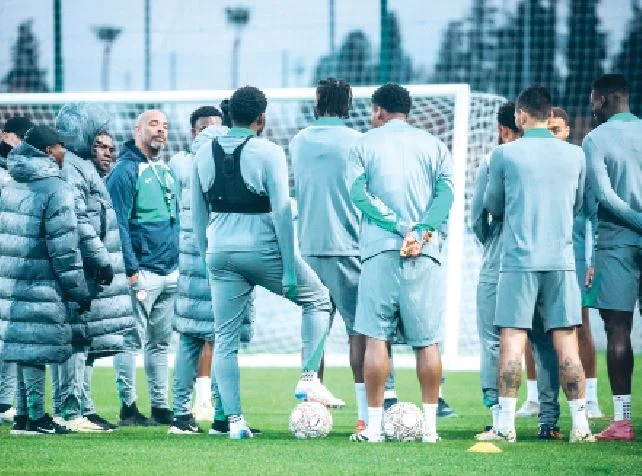
Nigeria is one of eight out of the ten most populous countries in the world that will not be at the 2026 FIFA World Cup. This has made many football fans in these countries support other teams in the tournament happening in North America.
A BBC World Service report says that among the ten most populous countries, only the United States and Brazil have teams at the World Cup. Russia and Nigeria, which have played in previous tournaments, are not participating this time.
China and Indonesia have each played in the tournament only once before. India, the most populous country in the world, and Bangladesh, Ethiopia, and Pakistan have never participated. India technically qualified for the 1950 finals in Brazil but pulled out weeks before the tournament.
The lack of representation from these football-loving nations has caused strange sights at watch parties in South Asia. Supporters in cities like Dhaka, Bangladesh, and parts of India and Indonesia are cheering for other countries. Argentina is especially popular among fans during this competition.
Audite Karim, a Bangladeshi actor and football fan, said it is hard to accept that countries with so many fans are not succeeding in football.
Stefan Szymanski, a British academic and economist, said that just having a big population does not guarantee success in football. He pointed out that wealth, infrastructure, and experience are also very important.


Szymanski, who co-wrote the popular book Soccernomics, mentioned that most countries need an average income of about $15,000 (N22.9 million) per person per year to compete for major titles. He noted that Brazil and Argentina, which earn less than that, have still won the World Cup eight times. He believes this is due to their long history with football.
He also explained that experience is why Uruguay, with just 3.5 million people, won the World Cup twice in 1930 and 1950. They played their first international match in 1902, well before Brazil's first match.
In contrast, many African and South Asian countries started playing football later or were under colonial rule for a long time. Only Morocco, which reached the semifinals in the 2022 World Cup, and South Korea, which finished fourth as co-hosts in 2002, have done well from their continents. Szymanski noted that countries like Indonesia, India, and Bangladesh still struggle to close the gap despite more interest in the sport.
Ethiopia’s case shows the effects of ongoing lack of investment. They almost qualified for the World Cup in the 2014 African qualifying series but were knocked out by Nigeria over two legs. Ethiopia had previously won the Africa Cup of Nations in 1962.
Kifle Seife, the Chief Executive Officer of the Ethiopian Premier League, shared that their top league has been badly impacted by not having enough approved stadiums. This problem also made the men’s national team play their African qualifying matches in Morocco.
Drop your comment
No comments yet — be the first to drop the gist 👇