
What Nigeria needs to tackle mob justice is public safety that focuses on people. Community policing should be local, accountable to the neighborhoods it serves, and built on relationships. Community policing means officers who know the streets and the people living there, quick response times that make reporting a crime feel important, and oversight where ordinary citizens, not just governors and commissioners, can influence how their safety is managed.
Families like the ALUU4 families in Port Harcourt are tough. They follow up on cases for years, sometimes getting a conviction after five years, while many suspects escape due to lack of evidence. Other families, like Deborah Yakubu’s, experience no closure at all. They mourn a daughter without knowing what she could have achieved.
Nigeria does not have an official database of mob justice cases. According to Amnesty International, from January 2012 to August 2023, there were at least 555 victims of mob violence from 363 incidents in Nigeria. Out of these, 57 people were killed, 32 were burnt alive, two were buried alive, and 23 were tortured to death. SBM Intelligence also reported 391 deaths in 279 separate incidents from 2019 to May 2022.
The 1999 Constitution guarantees the right to life under Section 33. Only a court can take a life, and the last death warrant in Nigeria was signed by a state governor in December 2016, nearly 10 years ago. The state struggles to execute someone who has been tried, convicted, and sentenced by a court.
Section 36 ensures the right to fair hearing and the presumption of innocence. A defendant can defend themselves or appeal a decision. In criminal cases, the state must prove, beyond reasonable doubt, that a crime was committed by the accused.
The legal process looks like this: The law: allegation, investigation, prosecution, trial, judgment, sentence. The mob: allegation, anger, violence, blood.
In mob violence, there is no burden of proof. There is no objectivity or proportionality. For victims like Deborah, it was a WhatsApp message that was seen as blasphemous that led to her death. For others like the ALUU4, it was a false alarm. For Ibrahim Mbaya, known as “Ibee” to his friends, it was an iPhone 12.
Mob justice may fill a gap that the formal system has left open. In the ALUU4 case, a conviction came after five years. In Deborah’s case, her attackers, caught on video, faced charges of criminal conspiracy and incitement of public disturbance, which carries a maximum sentence of two years. These two suspects were defended by 34 lawyers.

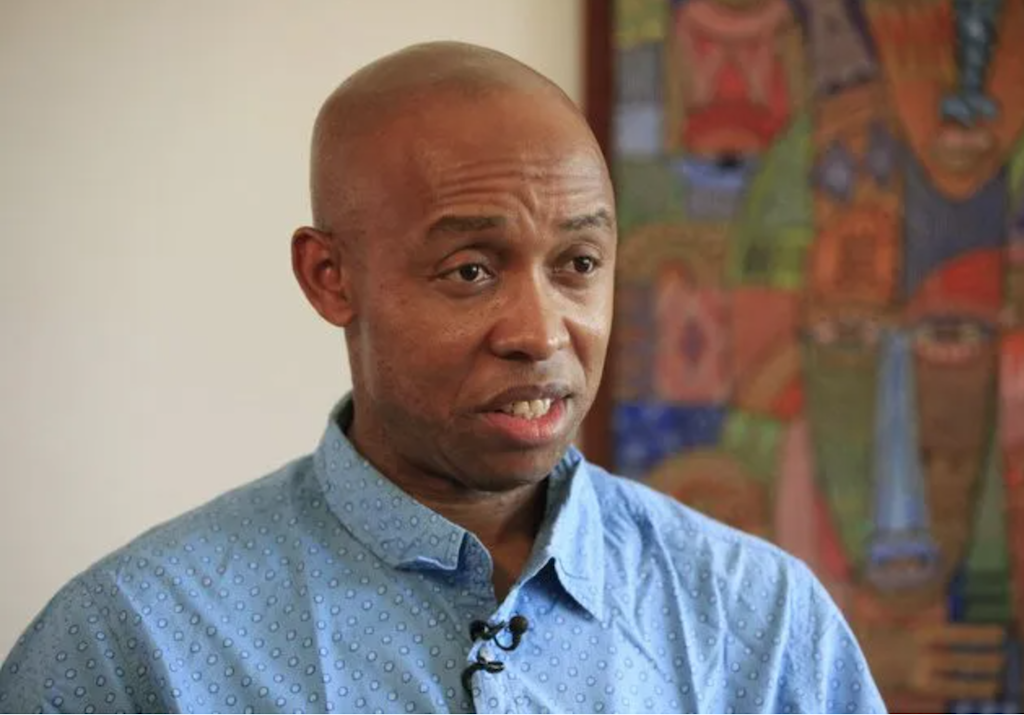
Ibrahim Mbaya was just 25. He graduated from the University of Jos and was making strides in Plateau’s fashion and creative scene. On July 26, he was accused of stealing a phone he didn’t even have. A group of young men tied him up and beat him with planks, demanding to know where the phone was. By the time he reached the Jos University Teaching Hospital, he was already dead.
Three suspects have been arrested. The police condemned the killing and reminded the public that the justice system provides a lawful process for such allegations. Videos of this horrific act were shared online. Some of that footage eventually reached the police, making arrests possible. It is a grim reminder that the same devices capturing this cruelty often provide the only accountability.
There is no clear reason why mob violence happens so easily among ordinary people. It could be the anonymity of a crowd or the idea that no one person is responsible. It could also be how quickly people’s conscience fades into collective anger. Regardless of the reason, there is no excuse for such evil.
Many Nigerians know mob violence is wrong, but too many have seen the formal system fail to deliver any real justice. Community policing does not need new laws since it is already part of our legal framework under the Police Act 2020, sections 113-119. Until we build trust locally, no changes in police control will stop the next mob from taking our youth.
The national conversation on policing focuses on addressing insecurity. The discussion on state police has been ongoing for years, but the rushed passing of the latest bill is concerning. The loudest promise is more police, more state control, and more force. What is rarely discussed is trust, which is likely a cause of mob violence.
A state police force controlled by governors does not automatically bring citizens closer to the law. It risks repeating the same problems we face now: politicisation and impunity. We need a security structure built from the community up, not one that is dictated from above.
What Nigeria truly needs to reduce mob justice is public safety that focuses on people. Community policing should be local, accountable to the neighborhoods it serves, and built on relationships. Until we build that trust, no restructuring of police control will stop the next mob from robbing us of our youth.



Drop your comment
No comments yet — be the first to drop the gist 👇