The Code of Conduct Tribunal (CCT) cannot explain 52 contracts it awarded in 2023. This is according to the latest report from the Office of the Auditor-General of the Federation (OAuGF) about the finances of federal institutions.
The report was made public after it was submitted to the National Assembly in July. It states that the CCT awarded these contracts worth N52.2 million in 2023 but did not send procurement records to the Bureau of Public Procurement as required by law.
This situation is part of three key issues the auditor general flagged in CCT’s records for the 2024 financial year. The other two issues involve N46.86 million payments made by the CCT without prepayment audit and N9.38 million paid without the necessary supporting documents.
In total, these questioned transactions amount to N108.46 million, which the auditor general’s office said the CCT has not accounted for satisfactorily.
On July 17, the Auditor-General of the Federation, Shaakaa Chira, submitted the report covering federal institutions' finances for 2024 to the National Assembly as required by the Nigerian constitution.
The document is titled the Auditor General of the Federation’s Annual Report on Non-Compliance/Internal Control Weaknesses in Ministries, Departments, and Agencies of the Federal Government of Nigeria for 2024.
Volume II of the report has a section on judiciary institutions. It presents findings on the CCT's spending problems. The CCT is Nigeria’s main court for anti-corruption cases involving breaches of ethical conduct and asset declarations by public officials.
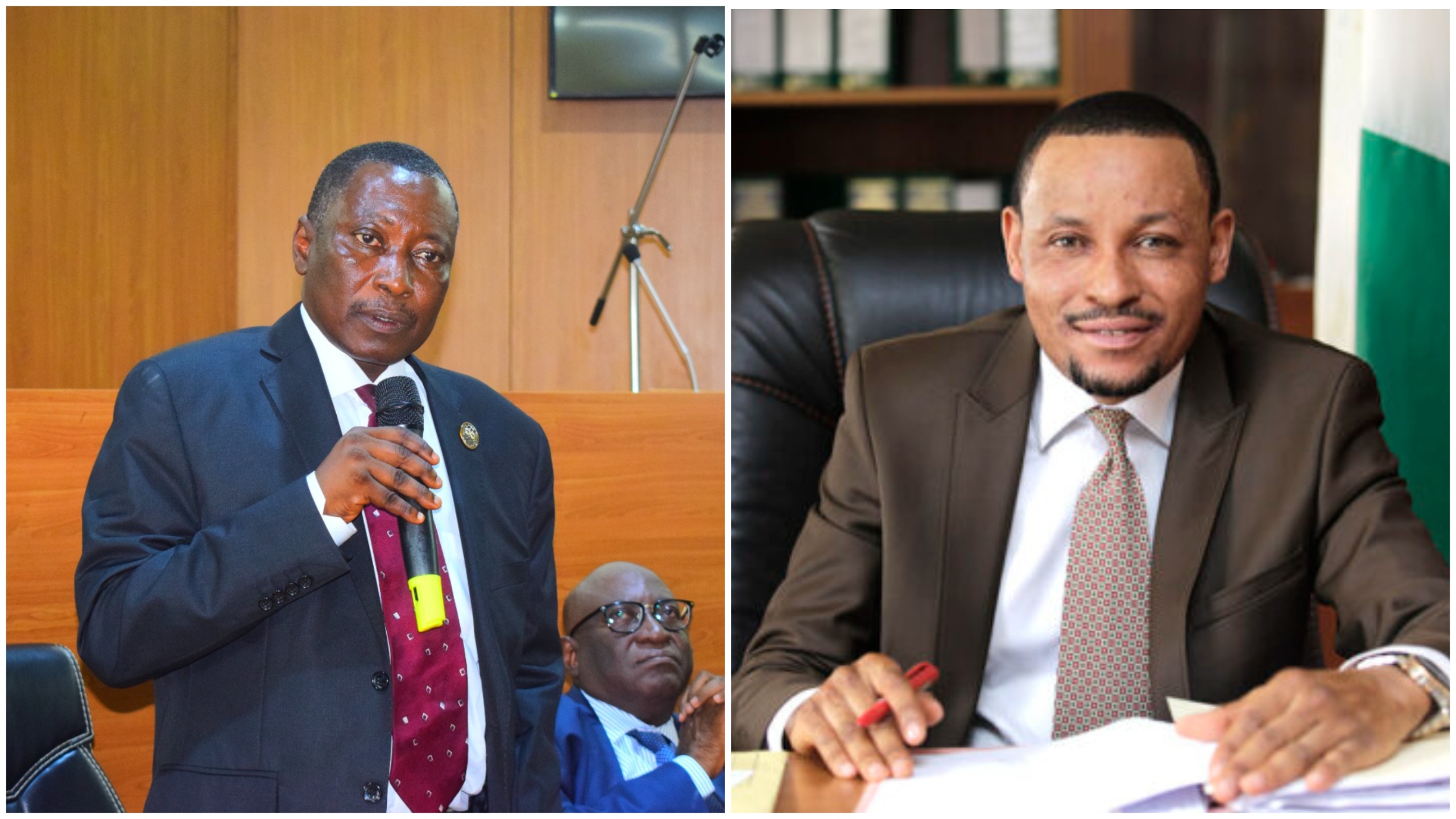
The report looks into 2024 expenditures of the CCT and other federal institutions, but the 52 contracts were awarded in 2023 when Danladi Umar was the chairman. He led the tribunal for 13 years from 2011 to 2024 until Mainasara Kogo took over in July 2024.
The audit report does not specify who was in charge when payments were made for these 52 contracts. It also does not mention what the contracts were for. It is unclear if this omission is because the CCT did not provide the required records or if the auditor general chose not to include the details.
The report did say there was no proof that the tribunal sent the procurement documents for the 52 contracts to the Bureau of Public Procurement (BPP), as the law requires. According to Section 16(13) of the Public Procurement Act 2007, procuring bodies must submit procurement records to the BPP within three months after the financial year ends.
The law states, “Copies of all procurement records shall be transmitted to the Bureau not later than 3 months after the end of the financial year and shall show:
“(a) information identifying the procuring entity and the contractors;
“(b) the date of the contract award;
“(c) the value of the contract; and
“(d) the detailed records of the procurement proceeding.”
But as of July, when the auditor-general submitted the report, the CCT had not sent the needed records for the 52 contracts.
“There was no evidence of transmitting procurement documents to the Bureau of Public Procurement (BPP) who is the statutory body to validate and authenticate due process adhered to during contracts pre-qualification process, and awards concluded,” the auditor general’s report stated.
The report blamed the “anomalies” on “weaknesses in the internal control system at the Code of Conduct Tribunal, Abuja.”
The audit, which is Nigeria’s most thorough review of public finances, pointed out that these failures risk losing public funds and awarding contracts to unqualified contractors.
The OAuGF received an explanation from the CCT about its failure to provide the BPP with necessary procurement records but found it unsatisfactory.
The management of CCT said the failure was due to the officer responsible for preparing and sending the procurement records. “The management regrets the action of the scheduled officer,” the CCT said in its response in the audit report. They added that a new officer would ensure compliance in the future.

But the audit report rejected this excuse, calling it “unsatisfactory.” It said its findings remain valid until the recommended actions are taken.
The report suggested that the CCT chairman should account for the N52.2 million spent on the 52 contracts to the Public Accounts Committees of the National Assembly. It also said the money should be recovered and sent back to the treasury, with proof of this sent to the committees. The report did not clarify if the money should still be recovered if the CCT can account for its use.
It also recommended sanctions for serious misconduct if the tribunal does not comply.
The audit found that the tribunal paid 29 vouchers worth N46,862,450 without the needed prepayment audit. The report said the CCT’s Internal Audit Department did not check the vouchers and their supporting documents before the payments.
This requirement is stated in the Financial Regulations 2009, which says government institutions must verify payment vouchers and their supporting documents before releasing public funds. This process is meant to ensure payments are fully authorized and backed by the necessary documents.
The auditor general said this failure put the funds at risk of misappropriation and diversion. The CCT management recognized the need for internal controls and promised that all payment vouchers would be pre-audited before future payments. But the auditor general dismissed this response as unsatisfactory and maintained the finding.
It recommended that the CCT account for the expenses to the National Assembly’s Public Accounts Committees, recover and send the amount back to the treasury, and provide proof of the remittance.
The audit also suggested sanctions for irregular payments if the tribunal fails to follow these recommendations.
The audit found that nine payment vouchers worth N9,385,000 for works and the procurement of goods and services did not have the required supporting documents. Missing documents included approvals, invoices, receipts, letters of award, Store Receipt Vouchers, Store Issue Vouchers, and project files.
The auditor general said this failure risks loss and diversion of public funds. The CCT management claimed documents were attached to the payment vouchers but admitted that they were not sufficient or convincing enough to justify the spending during the audit.
Again, the auditor general rejected this response as unsatisfactory. It recommended that the CCT account for the N9.385 million to the Public Accounts Committees, recover and send the amount back to the treasury, and provide proof of the remittance.
The report also suggested sanctions for irregular payments if the tribunal does not comply.
These latest findings follow an earlier audit report that flagged contract payments the CCT could not account for. In its 2019 audit report, the auditor general’s office revealed that the tribunal could not explain over N400 million it paid to contractors for various projects during that financial year.
Similar to the latest report, the OAuGF stated in its 2019 report (released in 2021) that the tribunal could not provide any documents to justify the contract expenditures. The tribunal’s chief registrar, Abdulmalik Shuaibu, told PREMIUM TIMES in December 2021 that the “issue has since been sorted out.”
But no such indication was seen in the auditor-general’s 2019 report, released two years after the questioned transactions.
CCT is a federal body set up under the Nigerian constitution and the Code of Conduct Bureau and Tribunal Act to judge alleged breaches of the code of conduct for public officials. Its functions include receiving complaints of non-compliance from the Code of Conduct Bureau (CCB).
These complaints include non-declaration or false declaration of assets, abuse of office, bribery, and conflicts of interest involving public officials, along with other breaches outlined in the code of conduct for public officers.
The tribunal conducts trials of public officers based on complaints from the CCB and imposes the penalties as prescribed by law. Appeals from its decisions go to the Court of Appeal and finally to the Supreme Court.
Notable figures who have faced trial at the tribunal include President Bola Tinubu, who was charged over his actions as former governor of Lagos state. Others include former Chief Justice of Nigeria Walter Onnoghen and former Senate President Bukola Saraki, who faced charges related to their time as former governor of Kwara State and as senate president.

Drop your comment
No comments yet — be the first to drop the gist 👇