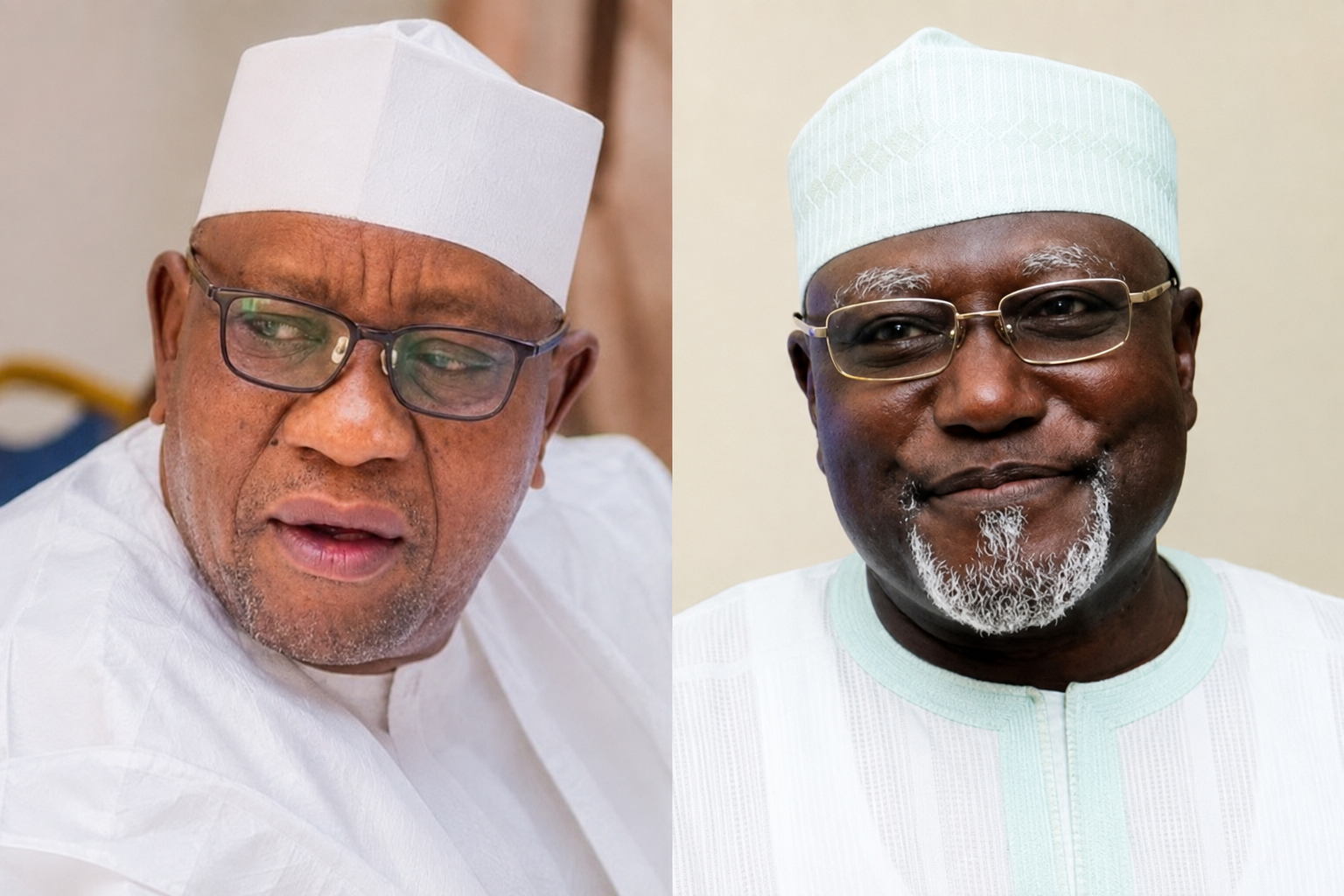
Earlier this year, Mustapha Inuwa and Lawal Daura were key politicians trying to form a strong opposition to the ruling All Progressives Congress (APC) in Katsina State.
By Sunday, that coalition has fallen apart.
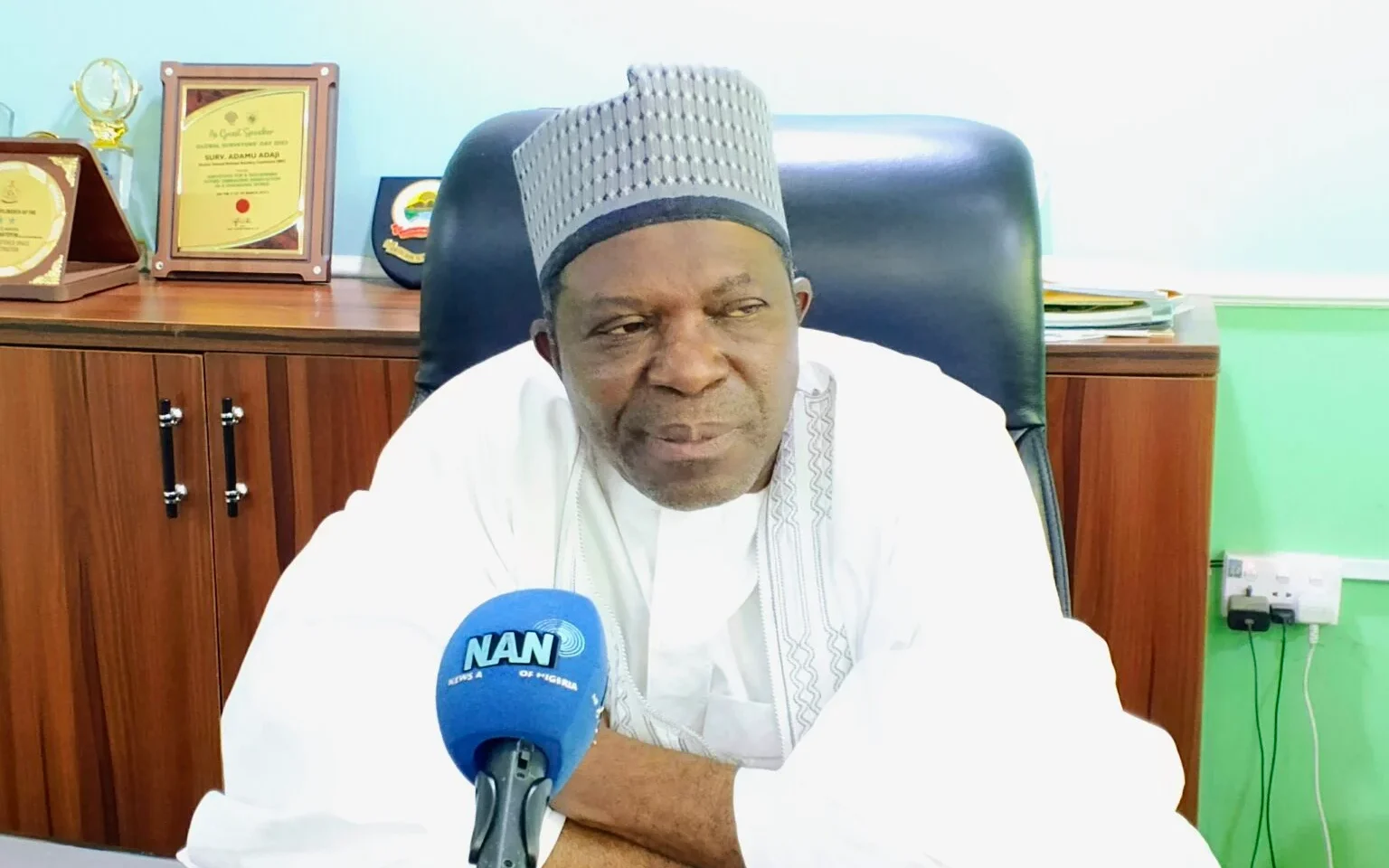
Mr Inuwa, a former secretary to the Katsina State Government and the first APC chairman in the state, announced he and his supporters were going back to the ruling party.
Mr Daura, who was the former Director-General of the State Security Service (SSS), chose to join the Allied Peoples Movement (APM).
Both politicians left the African Democratic Congress (ADC) with similar complaints. They said the party failed to provide a fair and democratic candidate-selection process.
But they have reached different conclusions on where to find a political alternative in Katsina.
Mr Inuwa believes that despite issues like insecurity and economic hardship, returning to the ruling party is the best option for his supporters.
On the other hand, Mr Daura sees the APC as politically weak and believes the APM is a better choice for achieving his political goals.
A Broken Coalition
At the start of the year, a political movement formed around the ADC brought together notable politicians against Governor Dikko Radda’s administration and the APC.
This group included Mr Inuwa, Mr Daura, former senators, and other political players with influence across the 34 local government areas in Katsina.
In January, PREMIUM TIMES reported that this gathering of political heavyweights was seen as a significant opposition force ahead of the 2027 elections.
Mr Inuwa has had a long political journey. He was the first APC chairman in Katsina and spent seven years as the state secretary under former Governor Aminu Masari.
His relationship with the APC soured after he lost the 2022 governorship primary to Mr Radda. He then moved to the opposition, first joining the Peoples Democratic Party (PDP) and later trying to build a new political platform in Katsina.
Speaking to supporters at his office in Katsina on Sunday, Mr Inuwa shared that his group initially thought about joining the Social Democratic Party before finally settling on the ADC.
He said members opened offices, rallied supporters, and funded political activities on their own, hoping the ADC would have a fairer process.
That hope, he said, eventually fell apart.
The conflict was mainly over claims about party structures and candidate selection. There were also accusations that proper primaries or consensus arrangements were ignored.
PREMIUM TIMES had reported on two layers of crisis within the Katsina ADC. There were rival structures competing for legitimacy and a separate issue in the Muhammad Rimi-led camp about how candidates were chosen.
This camp included Mr Inuwa, Mr Daura, and former Senator Ahmad Kaita.
Same Grievance, Different Paths
In his speech on Sunday, Mr Inuwa repeatedly mentioned the injustice in the candidate selection.
He said they joined and helped build the ADC because they expected it to operate differently from the political systems they criticized.
According to him, that expectation was not met.
Mr Inuwa alleged there was no proper primary election or valid consensus process for many elective positions.
He claimed that 154 people sought State House of Assembly tickets in various constituencies, but the final decisions were made without giving many a fair chance to participate.
He also mentioned a senatorial contest where five aspirants were overlooked, and someone who had not participated was chosen instead.
These are Mr Inuwa’s claims against his former party.
He said he and his supporters have sought corrective action since May 27, but they have not received any satisfying response.
Mr Inuwa also claimed a senior member of the political movement promised to meet with him five times to discuss the issue, but none of the meetings happened. He did not name this official.
Mr Daura has a similar view of the crisis.
In an interview with DCL Hausa, monitored by PREMIUM TIMES, the former intelligence chief described the ADC as a vehicle with a faulty engine.
He said, "We found a vehicle that appeared good, but we didn’t know its engine was faulty."
Mr Daura pointed to a lack of justice and weak leadership.
“Wherever you go, if justice is promised to you but leadership turns out to be weak, that place is not suitable to stay in,” he said.
His criticisms are not new.
PREMIUM TIMES reported in June that Mr Daura had rejected the candidate-selection process and demanded a legitimate consensus or proper primaries.
He had said political realignment was an option if attempts to resolve the dispute did not work.
Now, that realignment has taken place.
Inuwa Looks to Fix APC
Where Mr Inuwa and Mr Daura differ sharply is in their solutions.
Mr Inuwa did not return to the APC claiming that the ruling party had solved Katsina’s issues.
Instead, he acknowledged economic hardship, insecurity, public dissatisfaction, and divisions among political leaders in his speech.
But he concluded that, among available options, the APC remained the best choice.
“We know there are challenges in this country,” he said. “There are hardships, security issues, and other problems.”
But he said there is still time for the government to listen to advice and start addressing those issues.
His return is politically significant.
Mr Inuwa once led the APC in Katsina, served as SSG for seven years, and contested the party’s 2022 governorship primary against Mr Radda.
Mr Radda won by just 506 votes to 442, a difference of 64 delegates.
Mr Inuwa first said he would stay in the APC after the primary, but their relationship later soured. He left the party, supported the opposition, and joined efforts to form a new coalition.
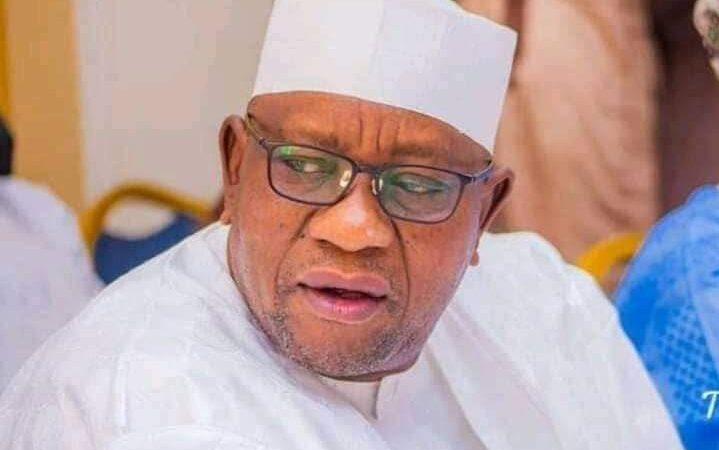
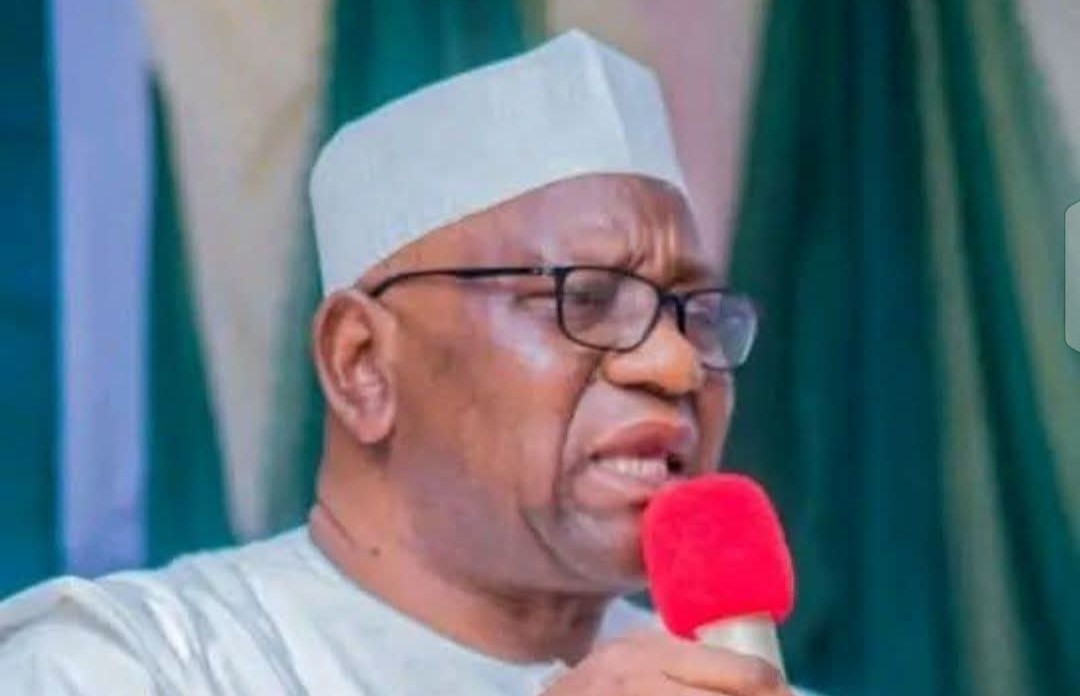
Now, he is back with the political camp led by the man who defeated him.
Mr Inuwa also explained how he wants his political group’s structure to fit into the ruling party.
He said each local government should make lists of important stakeholders from his group, while APC leaders should work with those returning to ensure representation and collaboration.
He urged existing party members and those returning to respect one another and avoid fighting over political positions.
Mr Inuwa also mentioned that his talks with Governor Radda included a promise that the governor would listen to advice.
Using a military analogy, he argued that divisions among political leaders could weaken the ruling party. He said even a good commander cannot win a war with a divided team.
In the report on his defection, PREMIUM TIMES said Mr Inuwa did not specify if any political concessions or appointments had been agreed with Mr Radda.
He also set a political test for his return.
Mr Inuwa called on Governor Radda and APC leaders to use the next “two or three months” to tackle complaints about insecurity and economic issues.
He said visible improvements would help those returning to persuade voters to support the party.
These comments are significant because they show that joining the ruling party does not erase the complaints that led to their opposition in the first place.
Daura Takes a Different Path
Mr Daura has rejected the route Mr Inuwa has taken.
In the DCL Hausa interview, he was asked if the APC could be seen as politically healthy.
He replied with another metaphor, saying the party is “limping” and its arm is practically in a sling while it cannot hear properly.
He described the APM as the healthiest political option available to him.
While Mr Inuwa was discussing options, he dismissed another platform as the “cassava party,” which seems to refer to the APM Mr Daura has now joined.
This difference shows how the argument has shifted from disagreements over the ADC’s candidate-selection process to a broader debate over which platform can truly compete for power in 2027.
Mr Daura's role in the APM is still unclear.
When DCL Hausa asked if he joined because he was offered a specific ticket, he denied having received or asked for one.
When asked what role he would take, he told the interviewer to wait until the end of the week for updates.
The former intelligence chief had previously said he wants to run for governor. His latest comments leave it open if he will continue that goal with the APM or take another role within the party.
What Happens to the ADC?
Mr Inuwa said in his speech that the departures have left the ADC with little more than its name in Katsina.
“The ADC is not merely unconscious, but dead,” he stated.
That is his view, not a proven fact.
The ADC still has politicians and competing structures in the state, so it is too early to know the full impact of the departures.
Mr Kaita’s position will be very important because Mr Inuwa and Mr Daura challenged how he emerged from the Rimi-led camp.
It remains unclear if their departures will strengthen his control of that group or weaken it.
The rival structure led by Musa Wamba, which put forward Salisu Uli as its governorship candidate, is also still relevant.
In an earlier interview, Mr Uli defended the process from his camp, saying it followed the recognized party structure and that INEC officials monitored its primaries.
He also mentioned that efforts to reconcile the rival camps had failed despite talks about sharing power.
The latest departures raise questions about how much of the ward and local government structures built by the Rimi-led group will follow Mr Inuwa into the APC, how much will go with Mr Daura to the APM, and how much will stay with the ADC.
The response from the national leadership will also be crucial.
In June, ADC National Publicity Secretary Bolaji Abdullahi told PREMIUM TIMES that the party’s primary process had flaws but defended its overall credibility.
What the Split Means for 2027
Mr Inuwa’s return may strengthen Mr Radda’s coalition by bringing back a politician who had strong support in the APC four years ago.
The 2022 governorship primary, where Mr Radda defeated him by just 64 delegate votes, showed Mr Inuwa’s influence within the party back then.
How much of that support remains intact now and how much he can bring into Mr Radda’s camp will become clearer as the realignment unfolds in local governments.
This does not guarantee an APC win in 2027.
The political results will depend on how many supporters move with Mr Inuwa, how the APC manages the interests of both old and returning members, and whether the Radda administration can address some of the security and economic issues Mr Inuwa himself pointed out.
Mr Daura’s move to the APM shows that politicians leaving the ADC are not necessarily heading to the ruling party.
Instead, Katsina’s opposition may split into several competing groups.
The ADC, APM, PDP, and any new parties forming from further realignments could divide opposition support across different platforms.
This split could help the APC if opposition votes end up scattered.
However, much will depend on the candidates that emerge, how well parties build structures across Katsina’s 34 local governments, future political realignments, and voters’ views on the Radda administration before the election.
For now, the opposition coalition that united Mr Inuwa and Mr Daura earlier this year has failed to hold.
They left the ADC on the same day but are now heading in different political directions.
For the 2027 elections in Katsina, the breakdown of their shared political platform could be just as important as the choices they have made now.
Drop your comment
No comments yet — be the first to drop the gist 👇